Blog & Articles
Latest Insights
Stay updated with our latest articles, study tips, and educational resources.
General
4/14/2026
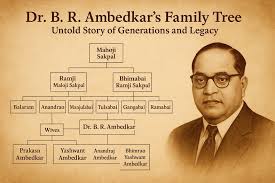
The Architect of Modern India: A Comprehensive Historical Analysis of Dr. B.R. Ambedkar
Dr. B.R. Ambedkar was born on April 14, 1891, in the Mhow Army Cantonment located in the Central Provinces (present-day Madhya Pradesh). He was the fourteenth and final child of Subedar Ramji Maloji Sakpal and Bhimabai Sakpal. The family belonged to the Mahar caste, a community historically designated as 'untouchable' and relegated to the absolute bottom of the Brahminical social hierarchy. However, the Mahar community also possessed a robust and proud military tradition, tracing their service back to the armies of the East India Company, which afforded them a degree of discipline, exposure, and socio-economic stability uncommon among other depressed classes.
K Shiva
Read MoreGeneral
3/25/2026
TATA IPL 2026: Full Match Schedule, All Team Squads & Player Prices (Ultimate Guide)
The 2026 Indian Premier League (IPL) starts on March 28 and ends with a grand final on May 31. This 19th season is a massive event for cricket fans, brands, and digital marketers alike. The money involved in the IPL has reached new heights. For example, the defending champions, Royal Challengers Bengaluru (RCB), were recently sold to the Aditya Birla Group for a record-breaking $1.78 billion (about ₹16,660 crore). This makes RCB the most valuable sports team in India.
K Shiva
Read More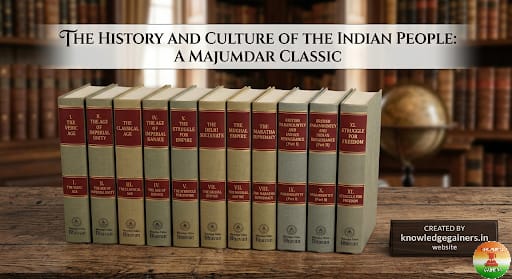
General
3/21/2026
THE HISTORY AND CULTURE OF THE INDIAN PEOPLE
The History and Culture of the Indian People, published by Bharatiya Vidya Bhavan and edited by R.C. Majumdar, is the most comprehensive "nationalist" history of India. It was written to provide an Indian perspective on the subcontinent's journey, moving away from the Eurocentric views of colonial historians.
K Shiva
Read More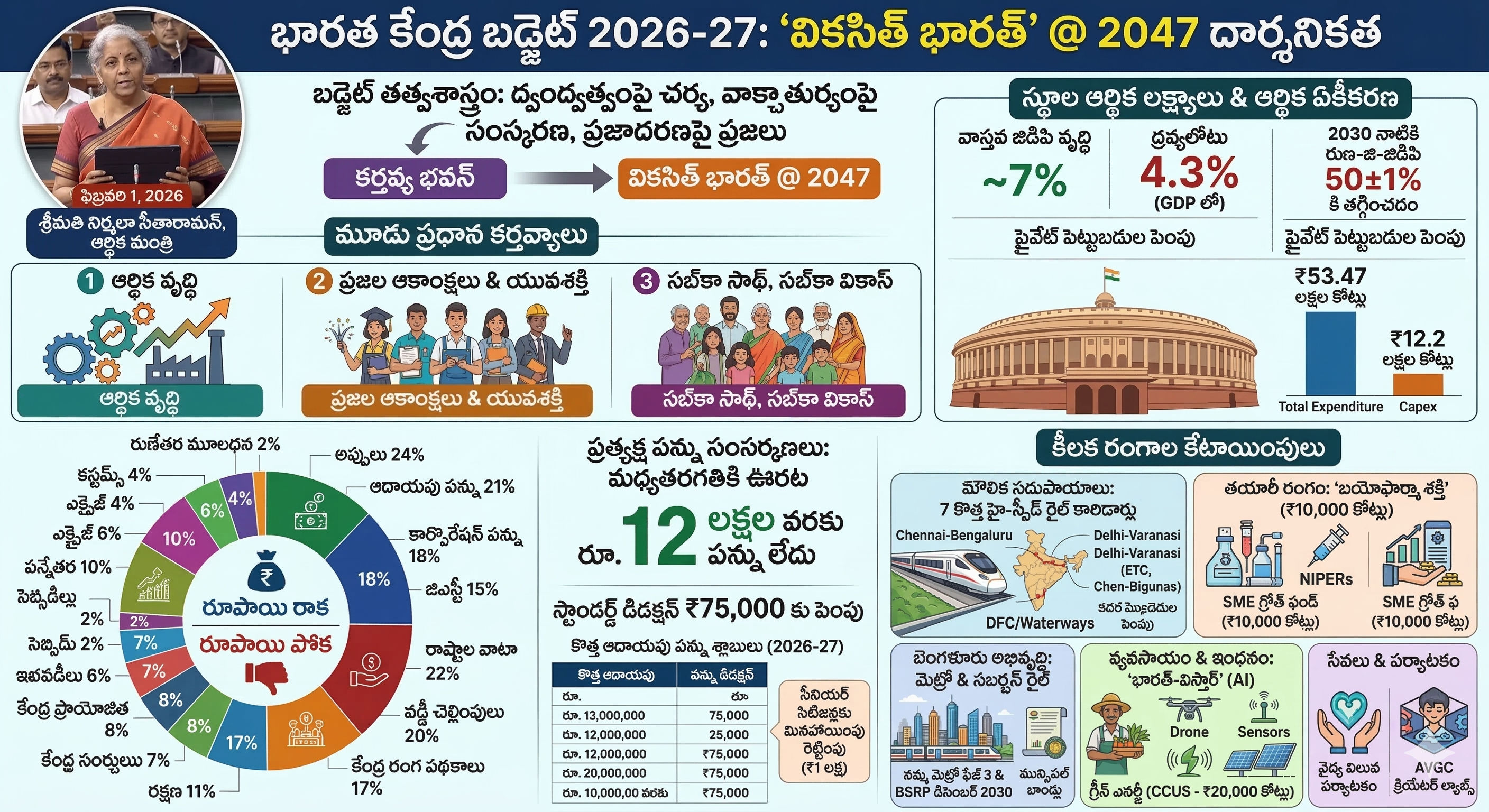
భారత ఆర్థిక మంత్రి శ్రీమతి నిర్మలా సీతారామన్ ఫిబ్రవరి 1, 2026 న పార్లమెంటులో 2026-27 ఆర్థిక సంవత్సరానికి గాను కేంద్ర బడ్జెట్ను సమర్పించారు. ఈ చారిత్రాత్మక పత్రం కేవలం రాబడి, వ్యయాల పద్దుల పట్టిక మాత్రమే కాకుండా, రాబోయే దశాబ్దాలలో భారతదేశ ఆర్థిక గమనాన్ని నిర్దేశించే ఒక సమగ్ర దార్శనికత. "ద్వంద్వత్వంపై చర్య, వాక్చాతుర్యంపై సంస్కరణ, ప్రజాదరణపై ప్రజలు" (Action over Ambivalence, Reform over Rhetoric, People over Populism) అనే బలమైన ఇతివృత్తంతో ఈ బడ్జెట్ మార్గనిర్దేశం చేయబడింది.
K Shiva
Read More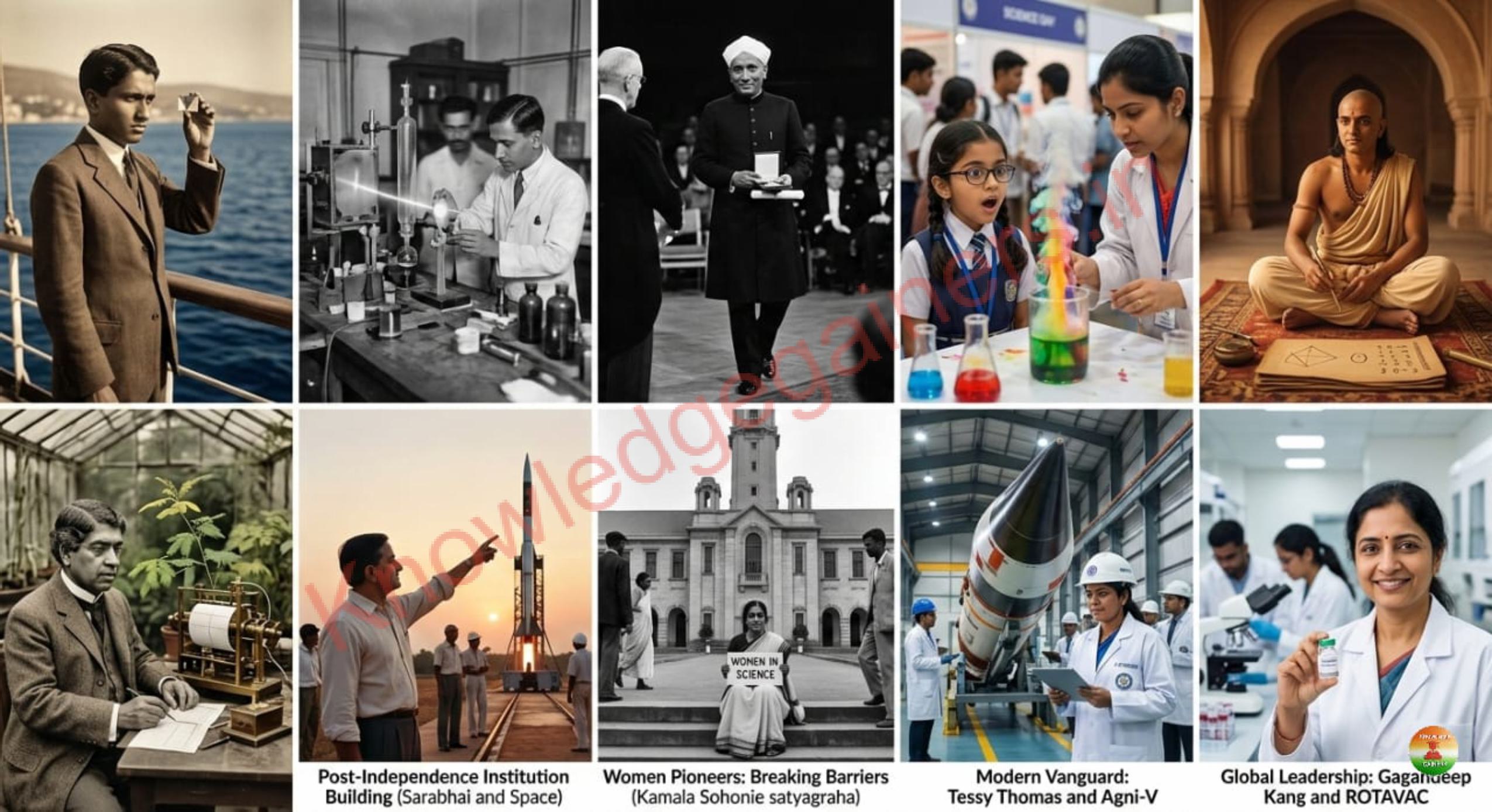
Science & Technology
2/28/2026
National Science Day of India 2026: The Complete History, C.V. Raman’s Legacy, and the Ultimate Guide to Indian Scientists
National Science Day is infinitely more profound than a mere commemorative date marked on a calendar; it is a highly dynamic, living, and breathing tribute to the absolute power of human curiosity and intellectual resilience. Sir C.V. Raman’s incredible, arduous journey—from staring intently at the deep blue waters of the Mediterranean Sea from the deck of a ship, to rigorously manipulating simple prisms in a modest Calcutta laboratory, to eventually receiving the Nobel Prize in Physics on the world stage—perfectly encapsulates the very essence of scientific inquiry. His life proves undeniably that the most profound truths of the universe are very often hidden in plain sight, merely waiting for a highly observant, unyielding mind to decode them.
K Shiva
Read More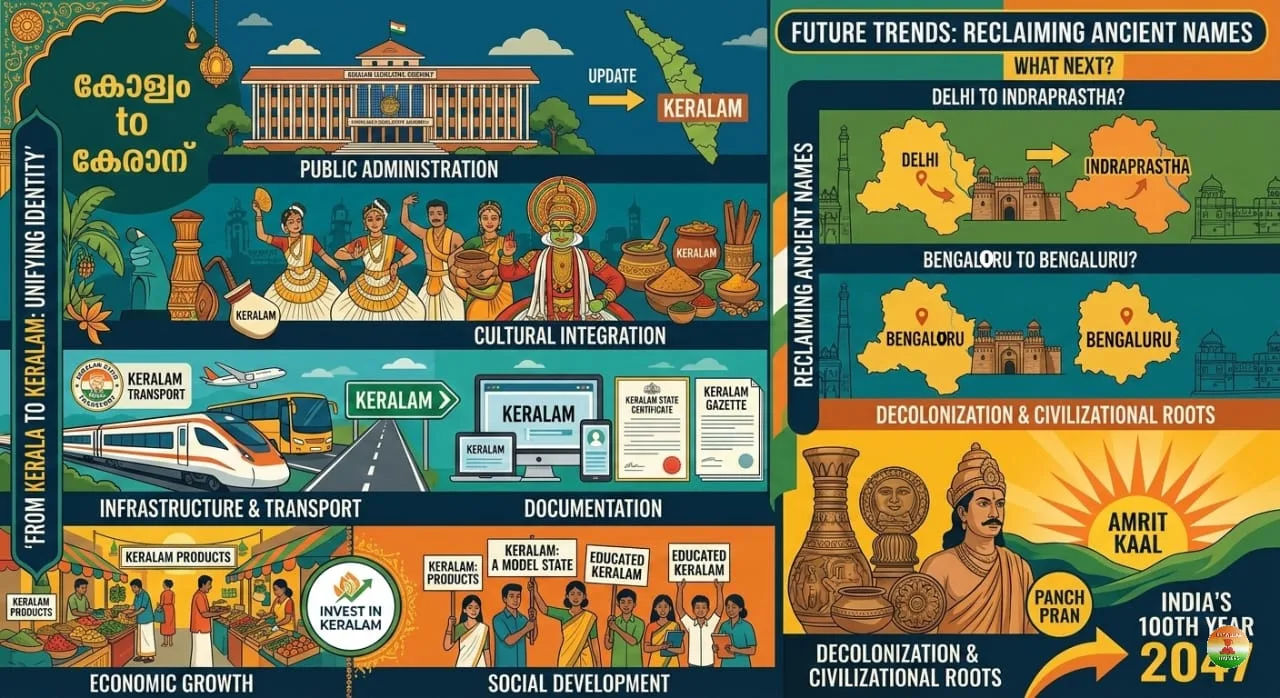
contemporary issues
2/27/2026
Understanding the Kerala to Keralam Name Change: History, Document Impact, and Future Trends
The Union Cabinet has officially approved the change from Kerala to Keralam. But why is this happening 79 years after India's independence? How will it affect your old educational certificates, property documents, and future job applications? And will other places, like Delhi, also get new names like Indraprastha? In this comprehensive guide, we will break down the history behind the Kerala to Keralam name change, explain the legal impact on your personal documents, and explore why the Indian government is reclaiming ancient names today.
K Shiva
Read More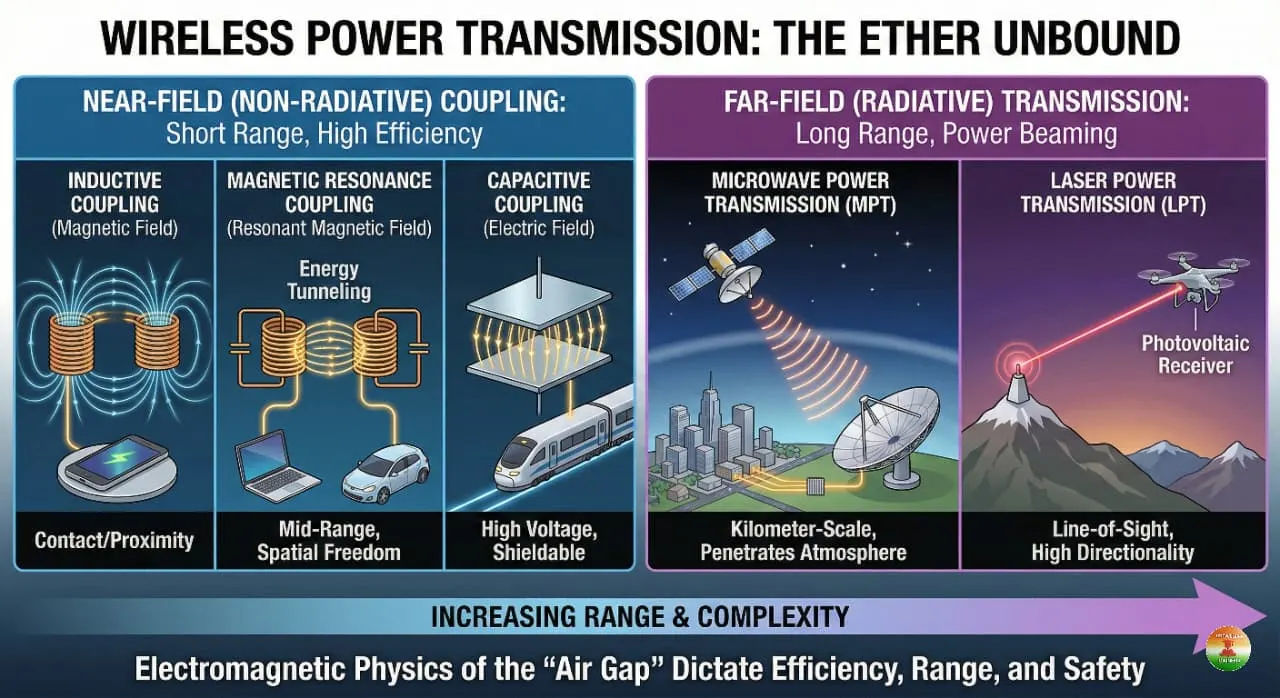
Science & Technology
2/13/2026
The Ether Unbound: A Comprehensive Analysis of Wireless Power Transmission, Its History, Mechanisms, and Socio-Environmental Trajectory
he transmission of electrical energy without the medium of solid conductors—Wireless Power Transmission (WPT)—stands as one of the most transformative yet contentious technological frontiers of the 21st century. What began as a Victorian-era dream of illuminating the globe without wires has evolved, by 2025, into a sophisticated ecosystem of near-field resonant charging pads, far-field microwave beams, and orbital solar arrays. This report provides an exhaustive examination of the WPT landscape. It dissects the electromagnetic physics governing the "air gap," traces the historical lineage from the high-voltage experiments of Nikola Tesla to the silicon-driven innovations of the modern era, and rigorously evaluates the biological and environmental implications of saturating the biosphere with anthropogenic fields. Furthermore, it analyzes the commercial and military breakthroughs of 2025 and 2026, weighing the economic efficiency of wireless infrastructure against the ecological imperatives of energy conservation and wildlife protection.
K Shiva
General
2/11/2026
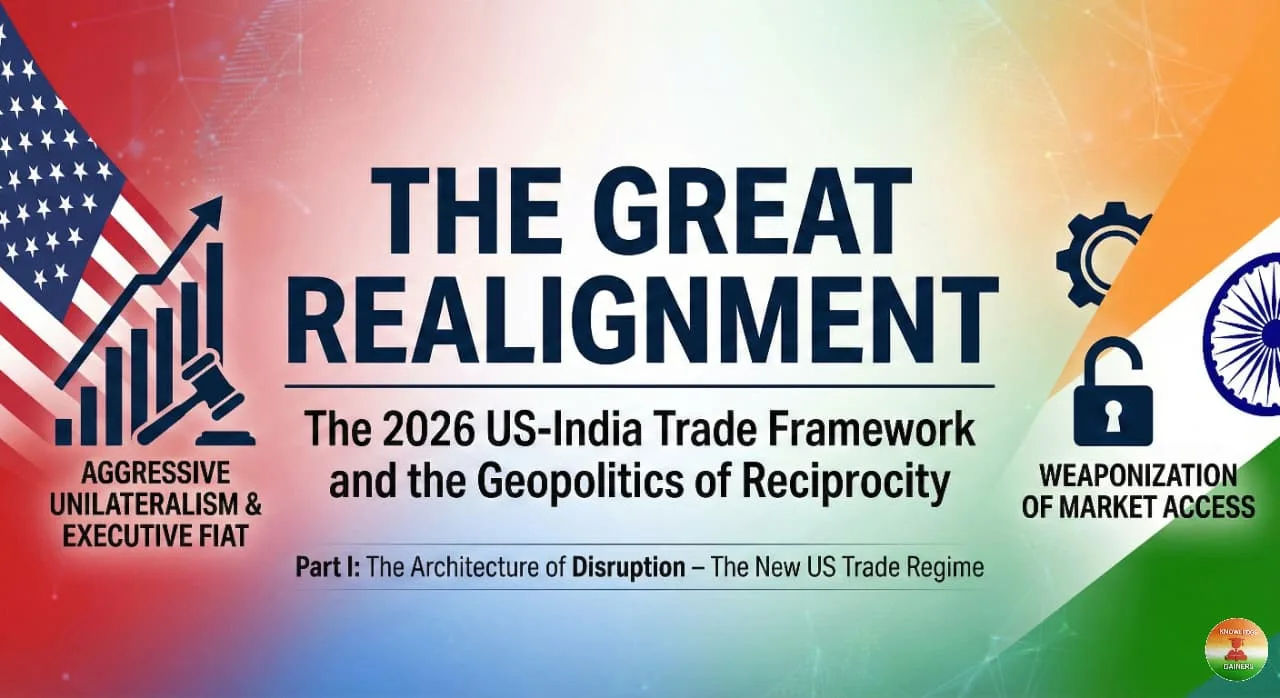
The Great Realignment: The 2026 US-India Trade Framework and the Geopolitics of Reciprocity
The global trading system, once anchored by the multilateral stability of the World Trade Organization (WTO), has fundamentally shifted in the mid-2020s toward a model defined by aggressive unilateralism, executive fiat, and the weaponization of market access. The interim trade agreement between the United States and India, announced in February 2026, cannot be understood in isolation. It is the latest and perhaps most significant artifact of a new "Reciprocal Trade" architecture established by the second Trump administration. This section dissects the structural transformation of US trade policy that precipitated the crisis of 2025 and the subsequent diplomatic recalibration of 2026.
K Shiva
Read MoreThe commemoration of the 77th Republic Day on January 26, 2026, represents a confluence of historical reverence, geopolitical strategy, and military modernization. As the nation gathers at Kartavya Path—the symbolic corridor of national duty—the celebrations are distinguished by a profound dual theme: the 150th anniversary of the national song, Vande Mataram, and the continuing vision of Aatmanirbhar Bharat (Self-Reliant India). This report provides an exhaustive analysis of the day's events, the historical genesis of the date, the strategic implications of the European Union's presence, and the nuances of the Constitution that forms the bedrock of the Indian Republic.
K Shiva
Read MoreOn the eve of India’s 77th Republic Day, the Ministry of Home Affairs announced a list of 131 citations for the Padma Awards, marking a pivotal moment in the nation's ongoing exercise of defining and recognizing civilian excellence. The 2026 cohort - comprising 5 Padma Vibhushan, 13 Padma Bhushan, and 113 Padma Shri awardees - serves as a mirror to the evolving socio-cultural and political landscape of Bharat. It reflects a deliberate calibration between honoring the "great and the good" of high office and cinema, and the "unsung heroes" who labor in the invisible margins of society.
K Shiva
Read MoreScience & Technology
1/25/2026
India’s Vande Bharat Sleeper Express: The 2026 Rail Revolution, Modern Features, and Stricter Cancellation Rules
The inauguration of the Vande Bharat Sleeper Express in January 2026 represents a seminal transformation in the Indian railway landscape, signaling a shift from conventional locomotive-hauled premium services to an integrated, self-propelled, semi-high-speed mobility solution. This transition is not merely technical but philosophical, embodying a move toward "airline-style" rail travel characterized by high-frequency operations, guaranteed confirmed berths, and significantly more stringent fiscal accountability for passengers. The core of this modernization effort is the implementation of the Railway Passengers (Cancellation of Ticket and Refund of Fare) Amendment Rules, 2026, which introduces a paradigm shift in how the national transporter manages inventory and revenue protection.
K Shiva
Read Morecontemporary issues
1/22/2026
Forest Right Without Women's Rights: How FRA Delays Shape Tribal Women's Lives In Srikakulam.
When we talk about "Forest Rights," we often think of maps, boundaries, and legal documents. But in the hilly terrains of Srikakulam, Andhra Pradesh, forest rights are a deeply personal—and gendered—struggle. Despite the Forest Rights Act (FRA) of 2006 being nearly two decades old, a recent report highlights a jarring reality: tribal women are the backbone of the forest economy, yet they remain invisible in the eyes of the law.
K Dileep
Read MoreGeneral
1/18/2026
Republic Day 2026: 30 Total Tableaux
The 77th Republic Day of India is set to be a landmark event, blending a century-old cultural legacy with a futuristic display of military strategy. This year’s parade at Kartavya Path is not just a show of strength, but a tribute to the anthem of the Indian freedom struggle and a symbol of India's growing global partnerships. A total of 30 tableaux will roll down Kartavya Path, showcasing the diversity and technological progress of the nation. 17 States & Union Territories: Each will present a unique cultural or developmental theme. Highlight: Andhra Pradesh is expected to showcase its "Green Energy Transition," while Tamil Nadu focuses on its status as an "EV Manufacturing Hub". 13 Ministries & Services: These will highlight national missions like Gati Shakti, the Digital India initiative, and the 10th anniversary of Startup India.
K Shiva
Read MoreEmployment News
1/18/2026
Employment News
The Employment News edition for January 17–23, 2026, highlights numerous recruitment opportunities across various government sectors, including significant openings in the Indian Air Force, NALCO, and various medical and research institutes.
K Shiva
Read MoreSystemic Fracture in the Workhorse: An Exhaustive Technical and Strategic Analysis of the PSLV-C61 and PSLV-C62 Mission Failures. The failure of PSLV-C62 is a watershed moment for Indian spaceflight. It has shattered the aura of invincibility surrounding the "Workhorse" PSLV and exposed deep fissures in the quality assurance and crisis management frameworks of the agency. The loss of EOS-N1 and EOS-09 leaves India strategically vulnerable, while the economic fallout threatens the momentum of the New Space.
K Shiva
Read MorePOLICY UPDATES
1/8/2026
Indian Army Agniveer New Marriage Rules: Impact on Permanent Selection
The No-Marriage Allowed rule for Agniveers is a pivotal regulation that reflects the broader institutional goals of the Agnipath scheme. By mandating that recruits remain unmarried during their service and the critical selection phase for permanent induction, the Indian Armed Forces are prioritizing operational focus and readiness during the most intensive years of a soldier’s career. While controversial from a socio-political perspective, the policy has been upheld by the judiciary as a valid exercise of sovereign authority in the interest of national defense. The success of this model will ultimately be measured by the professional caliber of the 25% who transition into the regular cadre and the successful reintegration of the remaining 75% into the national economy.
K Shiva
Read More
POLICY UPDATES
1/6/2026
How Banking Reforms are Shaping India’s $7 Trillion Economy Goal
The year 2026 represents a critical juncture in the evolution of the Indian financial architecture, marked by a decisive shift toward consolidation, regulatory tightening, and the pursuit of global scale. The overarching narrative of this period is defined by the government’s ambitious "Merger 2.0" blueprint, an initiative aimed at streamlining the public sector banking (PSB) landscape to align with the "Viksit Bharat" 2047 vision.
K Shiva
Read More
Comprehensive Analysis of the Sustainable Harnessing and Advancement of Nuclear Energy for Transforming India (SHANTI) Bill, 2025: A Paradigm Shift in National Energy Governance
K Shiva
Read More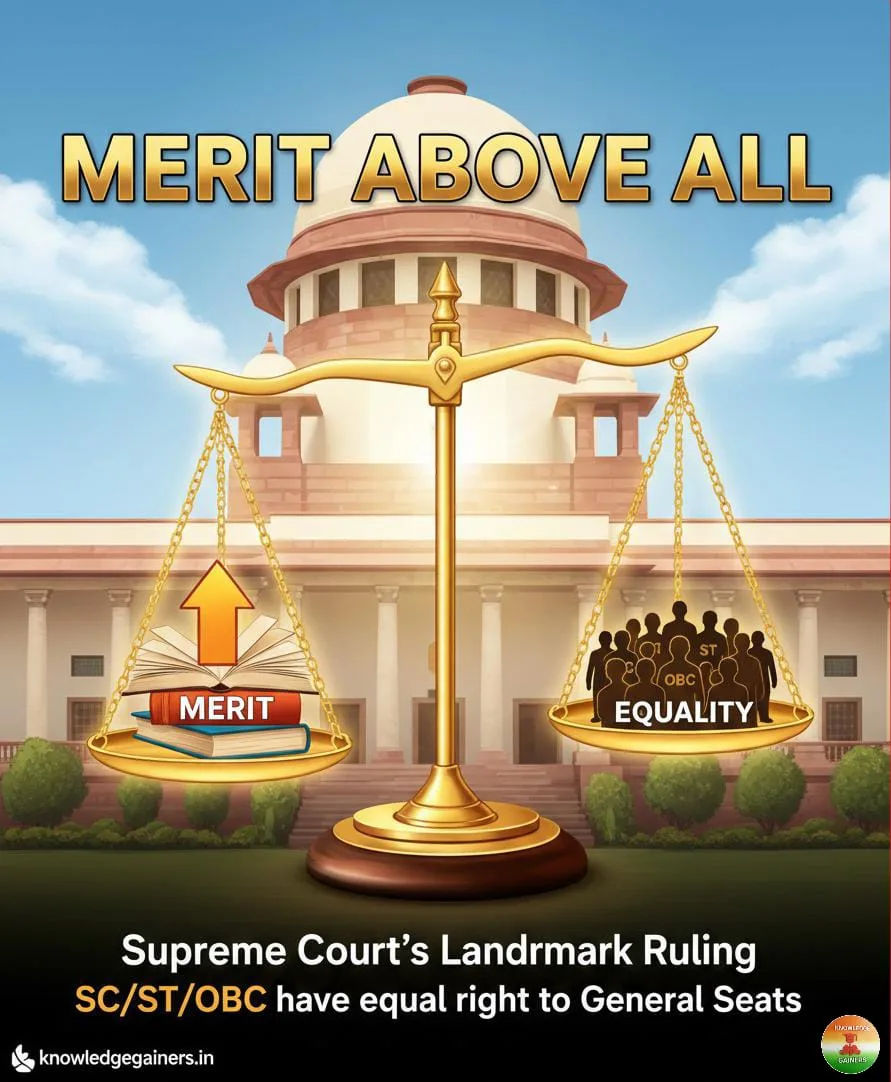
contemporary issues
1/5/2026
Merit Above All: Understanding the Supreme Court’s Landmark Ruling on General Category Seats
In a series of recent and historic judgments, the Supreme Court of India has reaffirmed a fundamental principle of our Constitution: The 'General Category' is not a quota for the upper castes - it is an open pool for everyone based purely on merit. The major decision: "SC-ST-OBC also have a right to 'General' seats." This ruling clarifies long-standing confusion regarding how reservation interacts with merit in government job recruitments.
K Shiva
Read More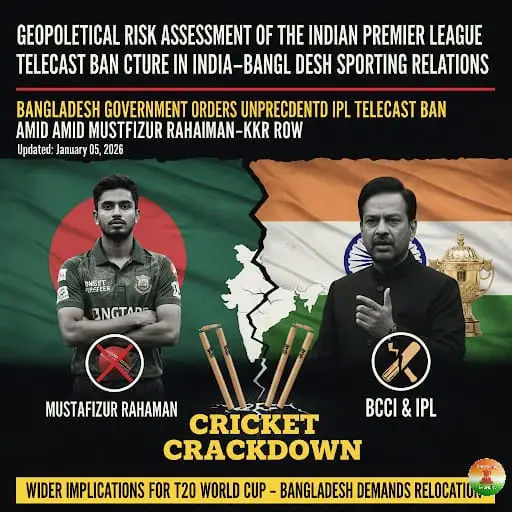
General
1/5/2026
Geopolitical Risk Assessment of the Indian Premier League Telecast Ban and the Fracture in India–Bangladesh Sporting Relations
The decision by the interim government of Bangladesh to impose an indefinite and blanket ban on the telecast and promotion of the Indian Premier League (IPL) within its borders represents a seminal moment in the history of South Asian sports diplomacy. Issued on January 5, 2026, the directive from the Ministry of Information and Broadcasting signifies the formal collapse of "cricket diplomacy" between two nations whose bilateral ties were once characterized as a "Golden Chapter". This regulatory intervention, enacted ostensibly in response to the administrative exclusion of Bangladeshi pacer Mustafizur Rahman from the Kolkata Knight Riders (KKR) franchise, serves as a proxy for much deeper geopolitical anxieties, communal tensions, and institutional friction.
K Shiva
Read MoreGeneral
1/3/2026
PM Internship Scheme 2026: Your Gateway to Corporate Success
The Prime Minister’s Internship Scheme (PMIS) is a revolutionary initiative by the Government of India aimed at empowering the youth by providing them with professional exposure in top corporate environments. This scheme bridges the gap between academic knowledge and industry requirements, ensuring that the next generation is "industry-ready."
K Shiva
Read More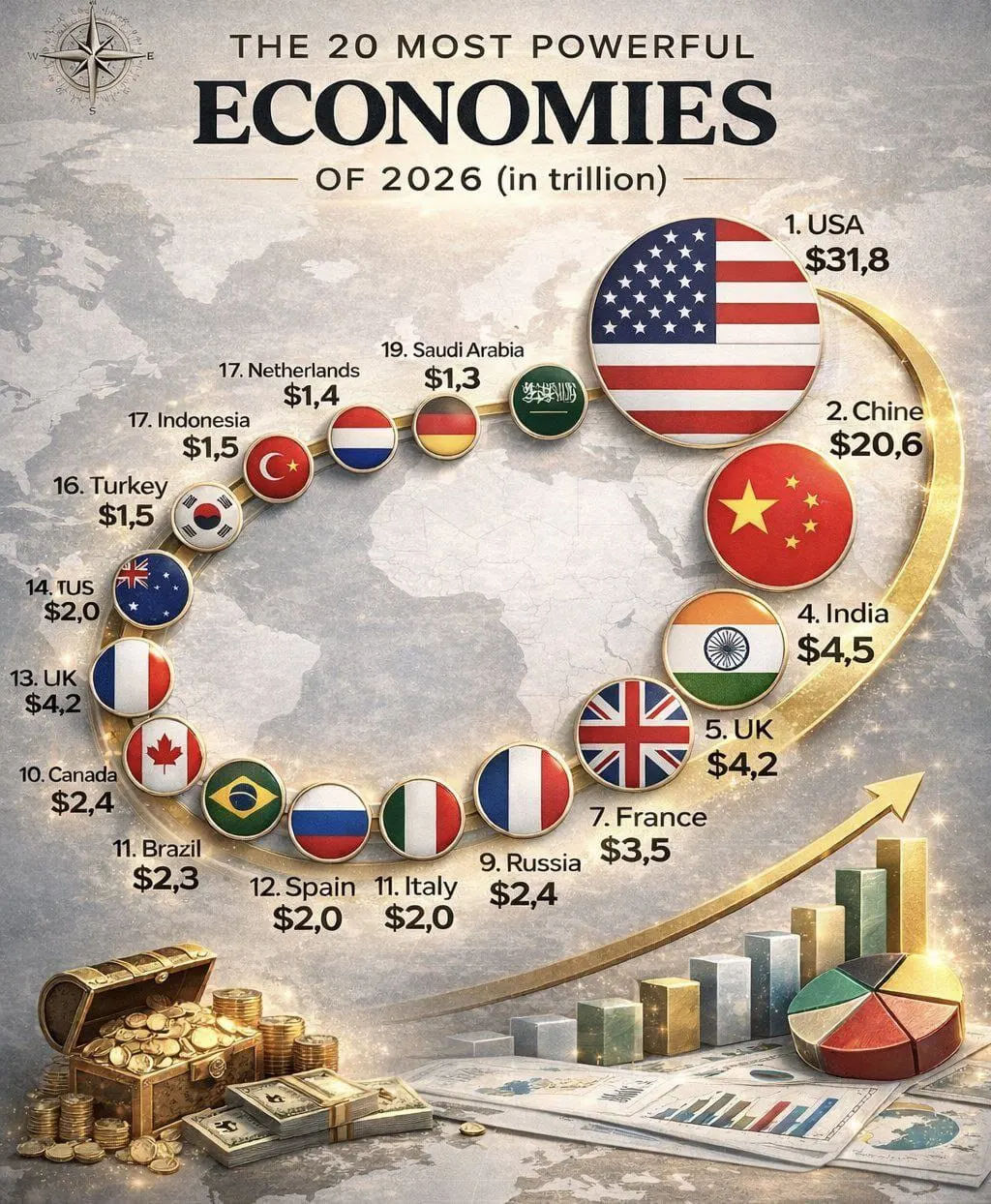
General
1/2/2026
The Tectonic Realignment of Global Commerce: Analyzing India’s Ascent to the World’s Fourth-Largest Economy by 2026
The year 2026 serves as a significant chronological marker in the history of global macroeconomics, representing the formal conclusion of the post-WWII economic hierarchy and the emergence of a multi-polar financial order. Central to this transition is the ascendance of India, which has systematically surpassed Japan to claim the position of the world’s fourth-largest economy by nominal Gross Domestic Product (GDP).
K Shiva
Read MoreTG CET PROCESS
12/31/2025
Telangana Common Entrance Tests (TG CETs) 2026: The Ultimate Guide to Admission into Professional Courses
The Telangana Council of Higher Education (TGCHE) has officially announced the schedule for the TG Common Entrance Tests 2026 (TG CETs-2026) for admissions into various professional courses for the academic year 2026-27. Whether you are an aspiring engineer, teacher, manager, or lawyer, this comprehensive guide covers everything you need to know about the upcoming exams, including dates, syllabus, and preparation tips.
K Shiva
Read MoreTG CET PROCESS
12/31/2025
TG EAPCET 2026: Your Definitive Guide to Telangana's Engineering, Agriculture & Pharmacy Entrance
Embarking on a career in Engineering, Agriculture, or Pharmacy in Telangana begins with one crucial step: acing the TG EAPCET 2026. Conducted meticulously by Jawaharlal Nehru Technological University Hyderabad (JNTUH) on behalf of the Telangana Council of Higher Education (TGCHE), this Computer Based Test (CBT) is the gateway to your dream professional course. This comprehensive guide covers all essential details, from exam dates and syllabus to crucial preparation strategies and important resources.
K Shiva
Read MoreTG CET PROCESS
12/31/2025
TG ECET 2026: The Comprehensive Guide for Lateral Entry into B.E./B.Tech & B.Pharm
The TG ECET 2026 (Telangana Engineering Common Entrance Test) is a specialized exam designed for Diploma holders and B.Sc. (Mathematics) degree holders seeking lateral entry admission into the second year of B.E., B.Tech, and B.Pharmacy courses. Conducted by Osmania University on behalf of the TGCHE, this exam provides a direct pathway for technical students to upgrade their qualifications at premier institutions.
K Shiva
Read MoreTG CET PROCESS
12/31/2025
TG EDCET 2026: Everything You Need to Know for B.Ed. Admissions in Telangana
The TG EDCET 2026 (Telangana Education Common Entrance Test) is the state-level entrance exam for candidates aspiring to join the two-year B.Ed. (Bachelor of Education) regular course in Government, Aided, and Private Colleges of Education in Telangana. Conducted by Kakatiya University, Warangal on behalf of the TGCHE, this exam evaluates the teaching potential and academic aptitude of future educators.
K Shiva
Read MoreTG CET PROCESS
12/31/2025
TG PGECET 2026: The Gateway to Post-Graduate Engineering & Pharmacy in Telangana
The TG PGECET 2026 (Telangana Post Graduate Engineering Common Entrance Test) is a state-level entrance examination for admission into regular PG courses in Engineering, Technology, Architecture, and Pharmacy (M.E. / M.Tech. / M.Pharm. / M.Arch.) for the academic year 2026-27. Conducted by JNTU Hyderabad on behalf of the TGCHE, this exam is essential for graduates seeking specialization in their respective fields at top-tier universities across Telangana.
K Shiva
Read MoreTG CET PROCESS
12/31/2025
TG PECET 2026: Complete Guide to Physical Education Admissions in Telangana
The TG PECET 2026 (Telangana Physical Education Common Entrance Test) is the specialized entrance process for candidates seeking admission into professional courses like B.P.Ed. (Bachelor of Physical Education) and U.G.D.Ed. (Under Graduate Diploma in Physical Education). Managed by Satavahana University, Karimnagar on behalf of the TGCHE, this test is distinct from other CETs as it focuses entirely on physical prowess rather than a written examination.
K Shiva
Read MoreTG CET PROCESS
12/31/2025
TG ICET 2026: The Comprehensive Guide for MBA & MCA Aspirants in Telangana
The Telangana Integrated Common Entrance Test (TG ICET) 2026 is the mandatory gateway for students seeking admission into MBA and MCA programs offered by state universities and their affiliated colleges. Conducted by Mahatma Gandhi University, Nalgonda, this exam evaluates a candidate's aptitude in logical reasoning, mathematical proficiency, and verbal communication. This guide provides a deep dive into everything you need to secure a top rank in the 2026 session.
K Shiva
Read MoreTG CET PROCESS
12/31/2025
TG LAWCET & PGLCET 2026: The Gateway to Legal Education in Telangana
The TG LAWCET & PGLCET 2026 (Telangana Law Common Entrance Test and Post Graduate Law Common Entrance Test) are the essential exams for candidates aspiring to pursue 3-year LLB, 5-year integrated LLB, or LLM programs in Telangana. Managed by Osmania University on behalf of the TGCHE, these tests evaluate legal aptitude and general awareness.
K Shiva
Read More
Website
12/30/2025
Gmail Evolution: Google Finally Allows Changing Your @gmail.com Address Without Losing Data!
For nearly two decades, the "holy grail" of Gmail features was the ability to change your actual username. If you were stuck with a cringeworthy email like cool_dude2004@gmail.com, your only choice was to start a brand-new account and face the nightmare of migrating years of emails, files, and subscriptions.
K Shiva
Read More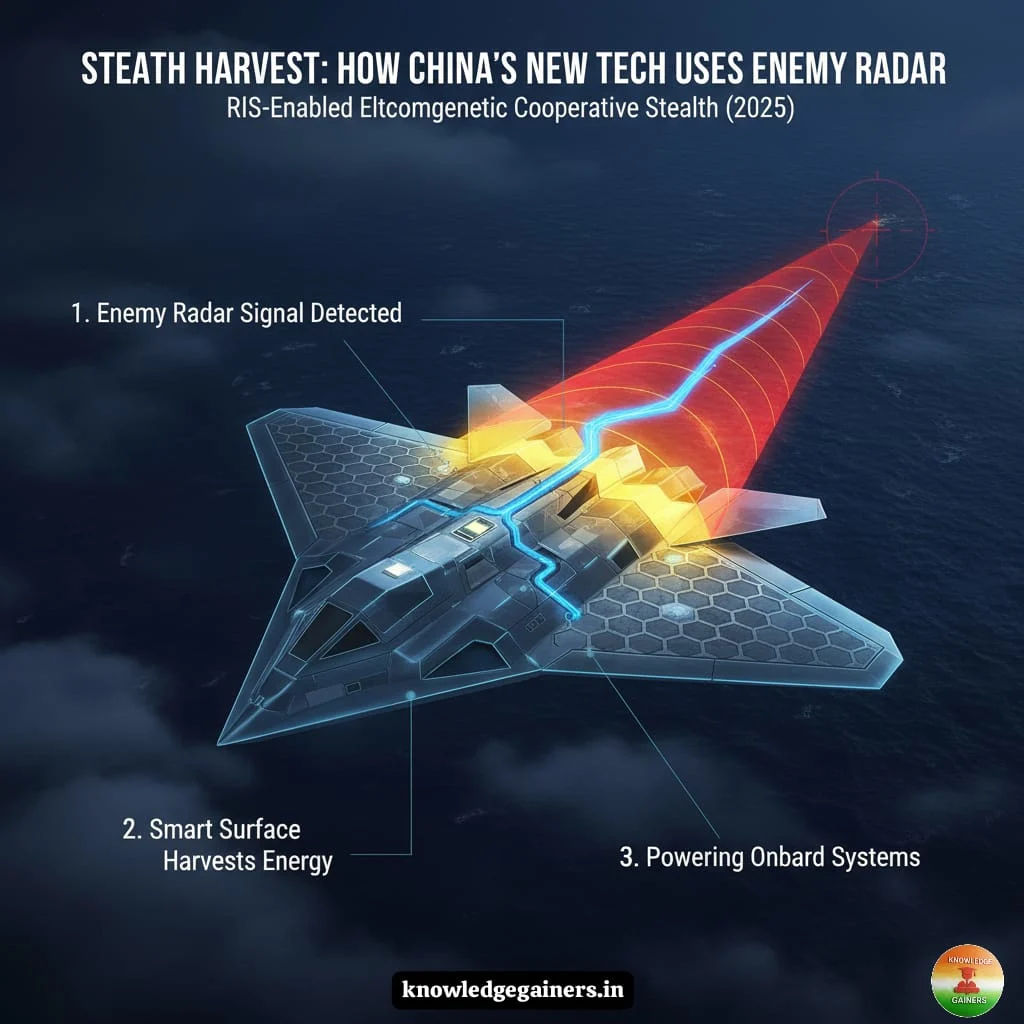
Science & Technology
12/28/2025
The Future of Self-Powered 6G: China’s Revolutionary "Smart Surface" That Turns Radar into Electricity
A team of researchers from Xidian University in China has unveiled a breakthrough in electromagnetic engineering: a "smart surface" that can harvest ambient electromagnetic waves—including enemy radar beams—and convert them into usable electrical power.
K Shiva
Read More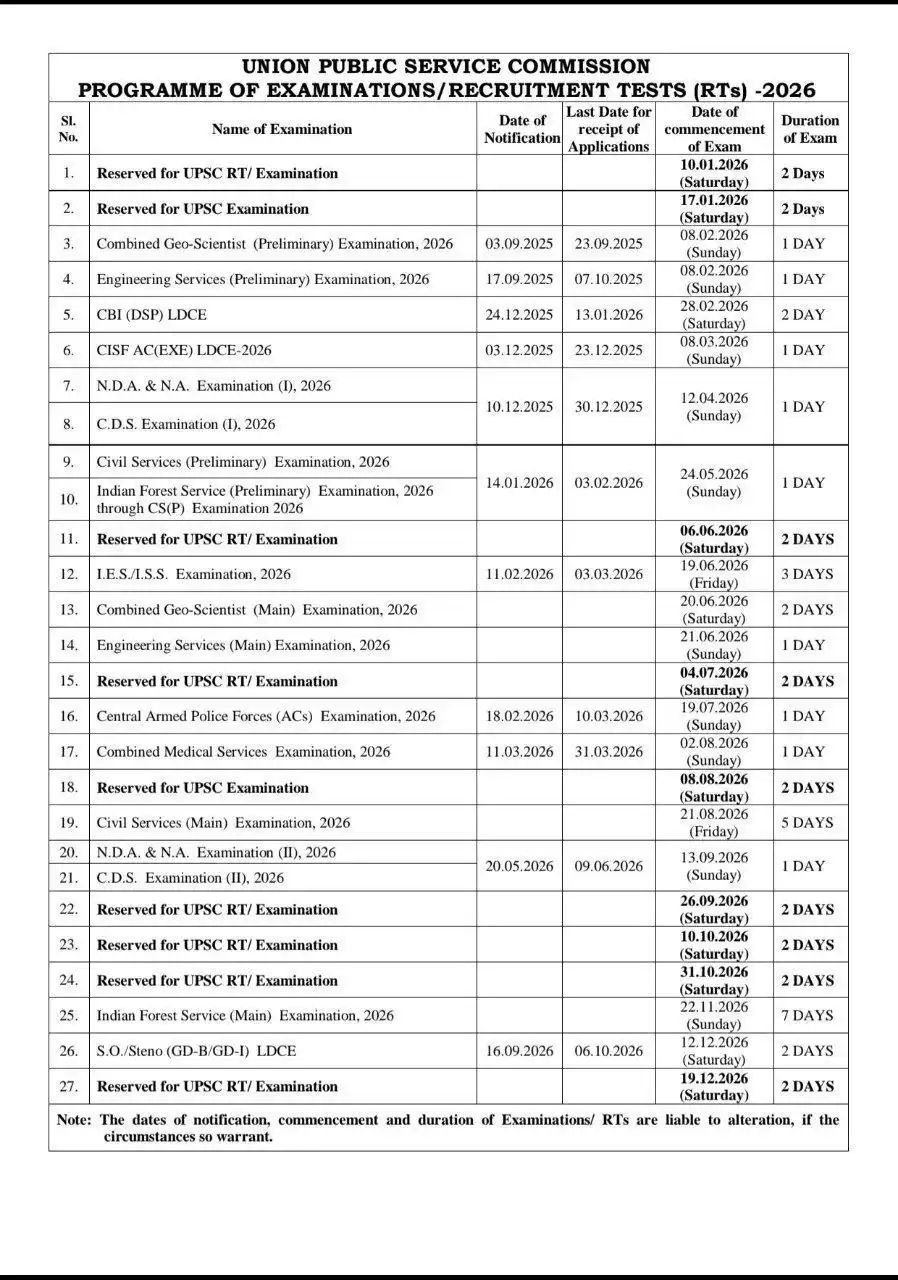
JOB NOTIFICATION
12/27/2025
UPSC Exam Calendar 2026 Out: Check Civil Services, NDA, CDS & Engineering Exam Dates
The Union Public Service Commission (UPSC) has officially released the Programme of Examinations/Recruitment Tests (RTs) for the year 2026. For every serious aspirant, this calendar is the foundational blueprint for their preparation strategy. Whether you are aiming for the IAS, IPS, IES, or Defense Services, knowing these dates is the first step toward success
K Shiva
Read More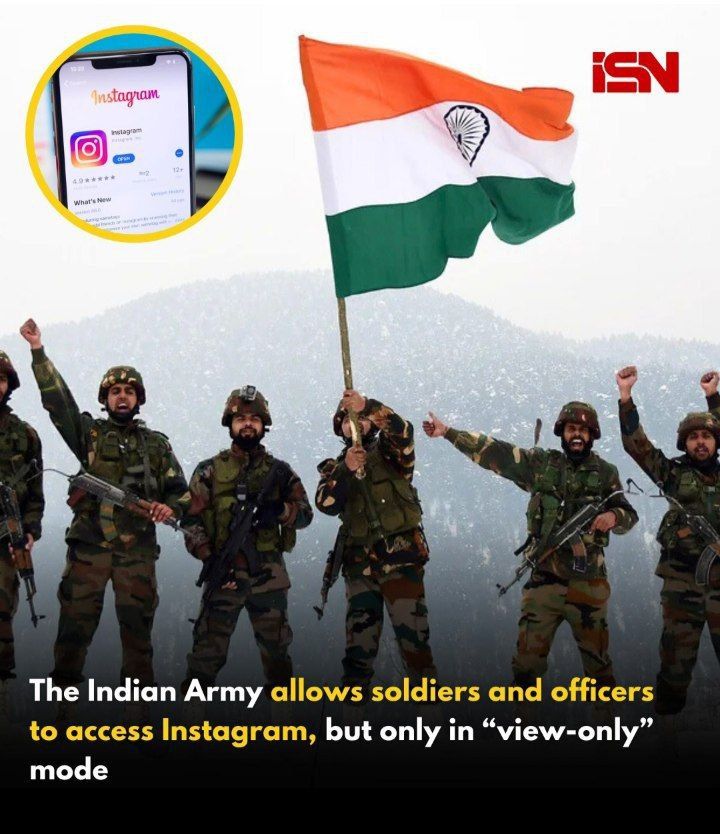
General
12/27/2025
The Core of the 2025 Army Policy updated : "Passive Participation"
The hallmark of this policy is the introduction of passive consumption. For platforms like Instagram, X (formerly Twitter), and YouTube, personnel are now permitted to create accounts or sign up, but with rigorous riders.
K Shiva
Read More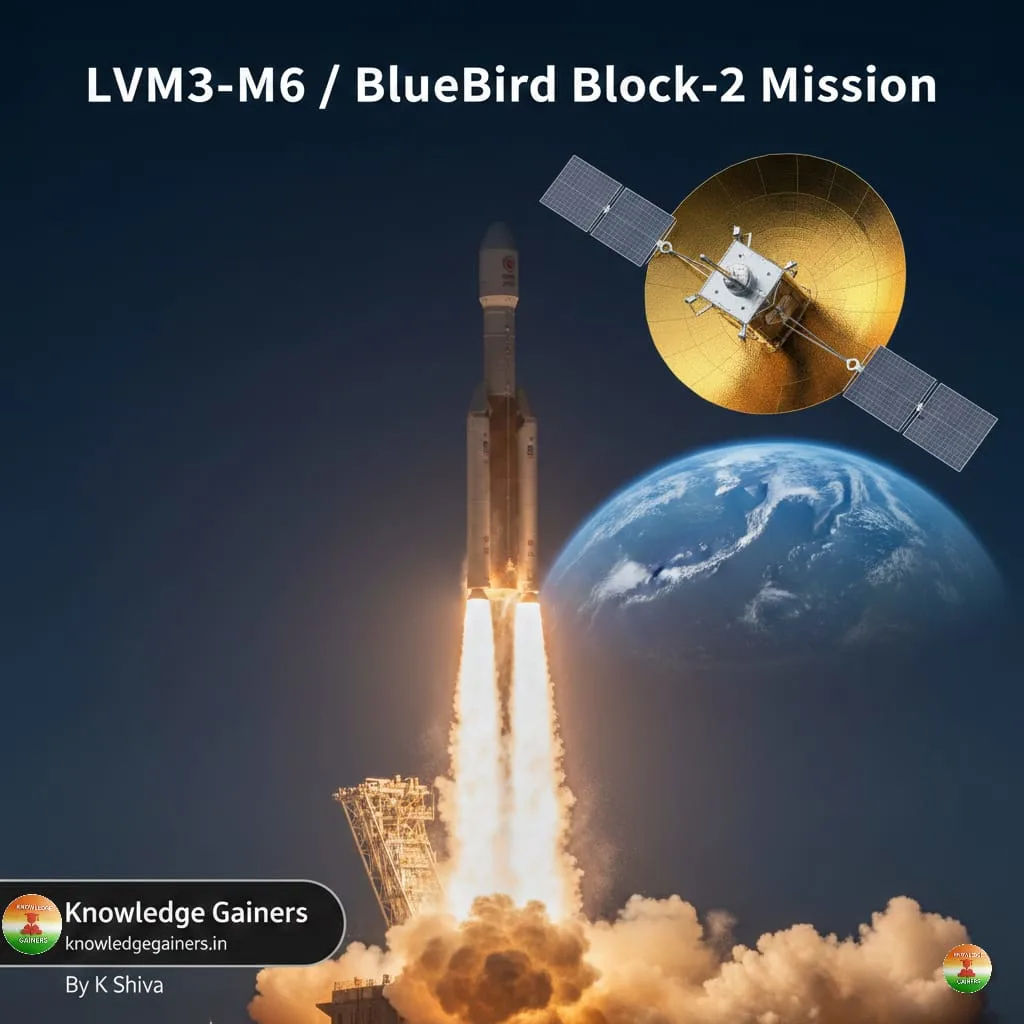
General
12/25/2025
LVM3-M6/ BlueBird Block-2 mission overview
ISRO's latest major mission, as of late December 2025, was the LVM3-M6/BlueBird Block-2 mission on December 24, 2025, successfully launching the heavy US communication satellite for AST SpaceMobile, marking India's heaviest payload to date and a significant commercial success for ISRO's heavy-lift rocket. This follows the LVM3-M5/CMS-03 launch in early November 2025 and shows ISRO's growing commercial space presence with rapid launches.
K Shiva
Read More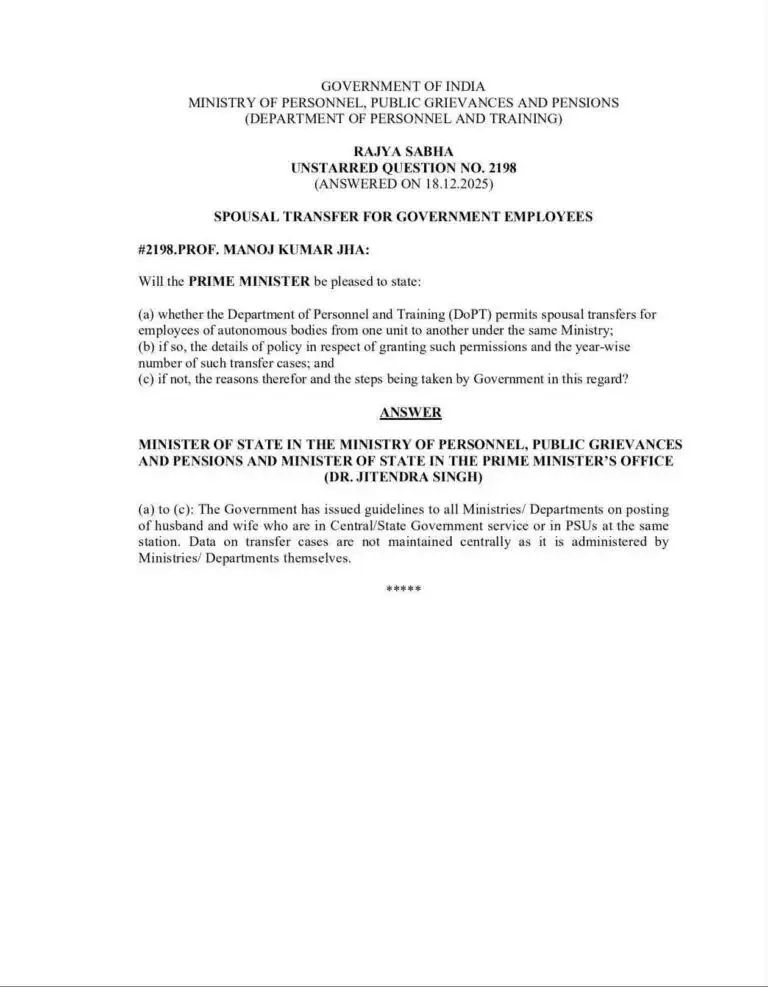
POLICY UPDATES
12/25/2025
Spousal Transfers: A Complete Guide to the 2025 Government Policy Updates
In a significant update for the government workforce, the Ministry of Personnel, Public Grievances, and Pensions recently clarified its stance on spousal transfers. Through a Rajya Sabha response on December 18, 2025, the government reaffirmed its commitment to keeping families together while balancing administrative needs.
K Shiva
Read More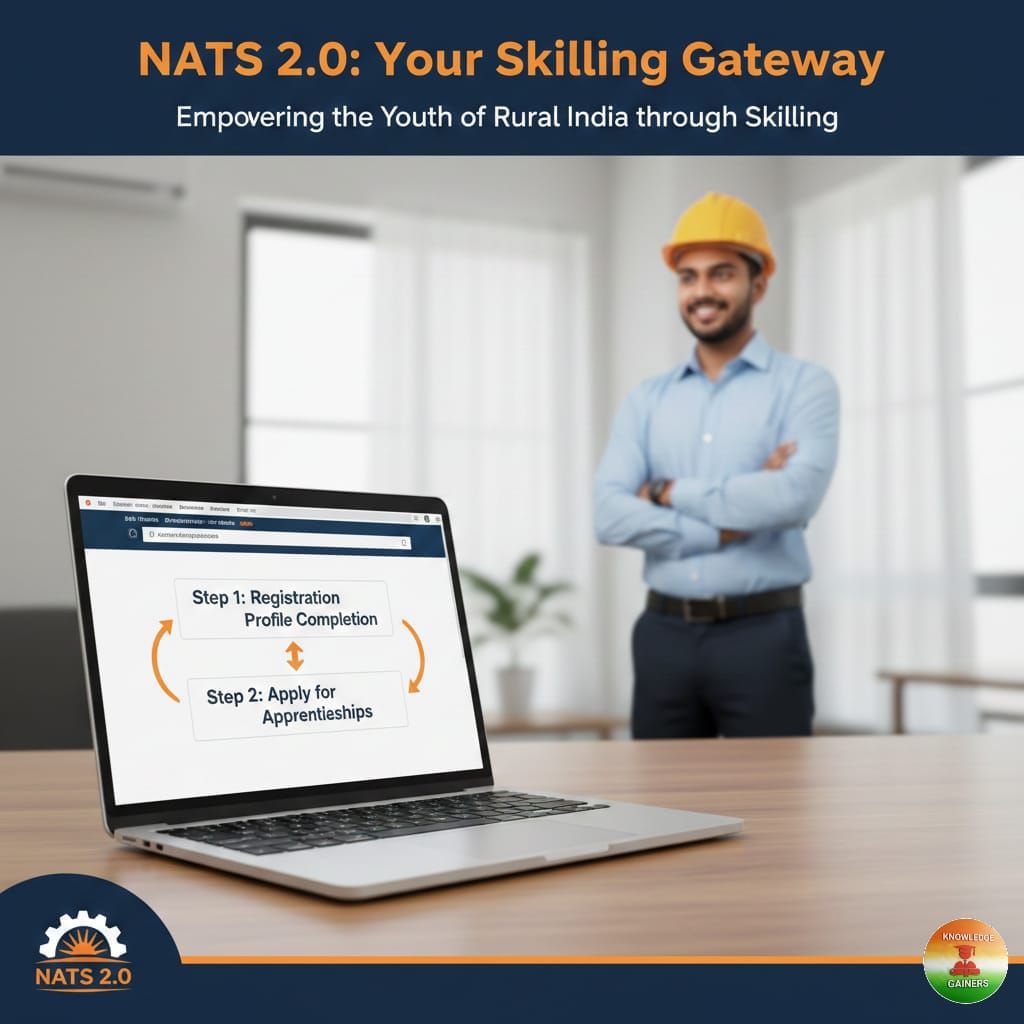
General
12/24/2025
How to Create a NATS 2.0 Account: A Complete Guide for Students to Secure Internships
In today’s competitive job market, practical experience is the bridge between a degree and a career. The National Apprenticeship Training Scheme (NATS) is a flagship initiative by the Government of India designed to provide this exact bridge. By enrolling in NATS 2.0, students can access hands-on On-the-Job-Training (OJT) with monthly stipends and earn a government-recognized Certificate of Proficiency.
K Shiva
Read More
contemporary issues
12/22/2025
The VB–G RAM G Act: A Step Backward for Rural India?
While the government celebrates the passage of the Viksit Bharat-G RAM G Act, 2025, a deeper look reveals several critical issues that could make it a burden rather than a boon for the rural poor. By dismantling the established framework of MGNREGA, the new Act introduces fiscal and operational hurdles that may ultimately deprive workers of their livelihood.
Kuna Dhanunjayarao
Read More
POLICY UPDATES
12/22/2025
Indian Railways Announces Fare Hike for Long-Distance Travel: What You Need to Know
Traveling by train in India is set to become slightly more expensive for long-distance commuters. The Ministry of Railways has announced a marginal increase in passenger fares, effective from December 26. While the hike aims to bolster railway infrastructure and safety, the government has ensured that short-distance travelers and daily commuters remain unaffected.
K Shiva
Read More
contemporary issues
12/22/2025
Unlocking Zero Tax: How to Earn ₹19.20 Lakh Annually and Pay No Income Tax Under the New Regime
The Union Budget 2025 brought welcome news for taxpayers, particularly those opting for the new tax regime. The government announced that income up to ₹12 lakh will attract zero income tax, further sweetened by a standard deduction of ₹75,000, effectively making income up to ₹12.75 lakh completely tax-free. This is a significant relief for many, but what if we told you that even with an annual income of ₹19.20 lakh, you could legally pay zero income tax?
K Shiva
Read More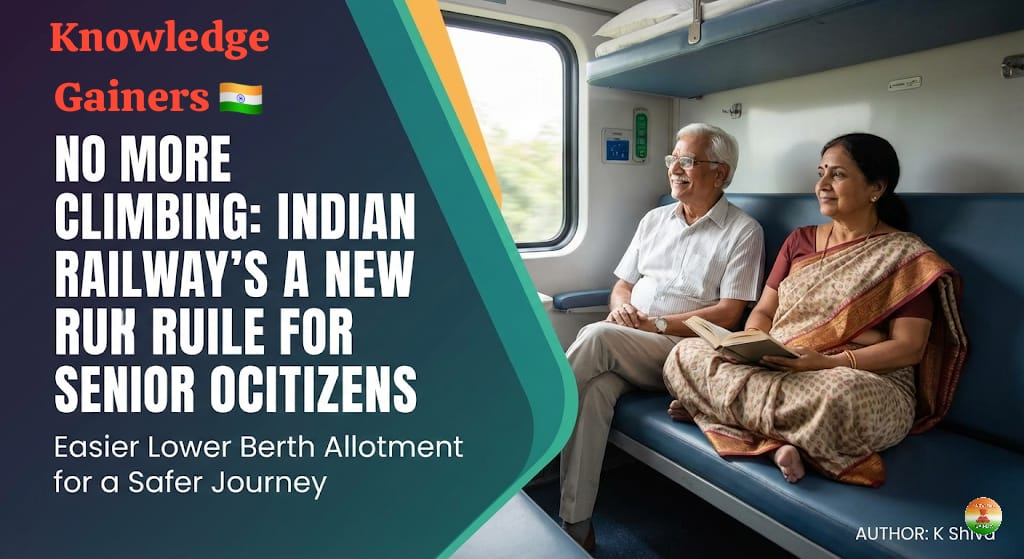
POLICY UPDATES
12/21/2025
No More Climbing: Indian Railways’ New Rule Makes Travel Easier for Senior Citizens
For millions of elderly passengers in India, train journeys often come with a lingering anxiety: "Will I get a lower berth, or will I be forced to climb to the top?" Addressing this long-standing concern, Indian Railways has introduced a significant rule change aimed at prioritizing travel comfort for senior citizens. The updated guidelines are designed to make the allocation of lower berths smoother, reducing the physical strain and safety risks associated with upper berths.
K Shiva
Read More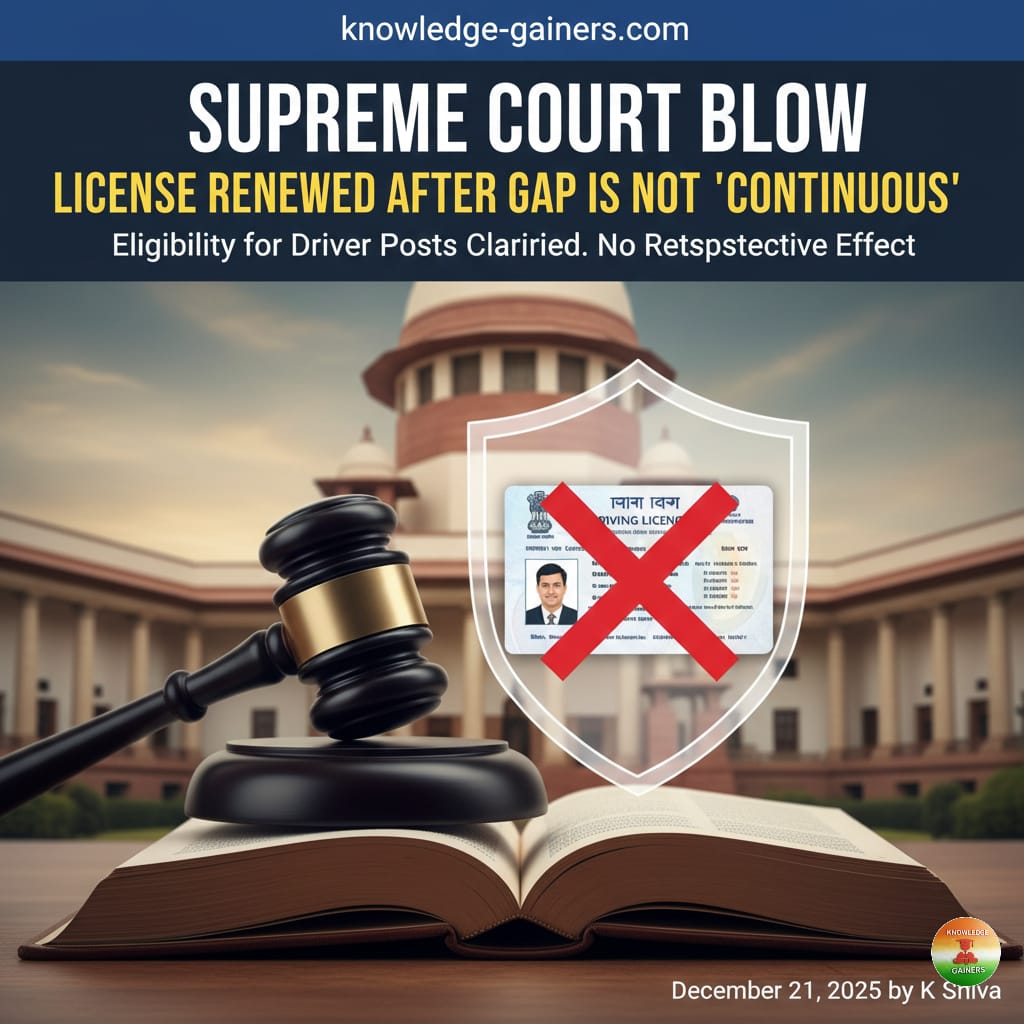
contemporary issues
12/21/2025
Renewal of Driving Licence After a Gap: Supreme Court Rules on "Continuous" Eligibility
In a landmark judgment that carries significant weight for both job seekers and everyday drivers, the Supreme Court of India has clarified the legal status of renewed driving licences. The Court ruled that if a driving licence is renewed after a gap following its expiry, the renewal will not operate retrospectively from the date of expiry.
K Shiva
Read More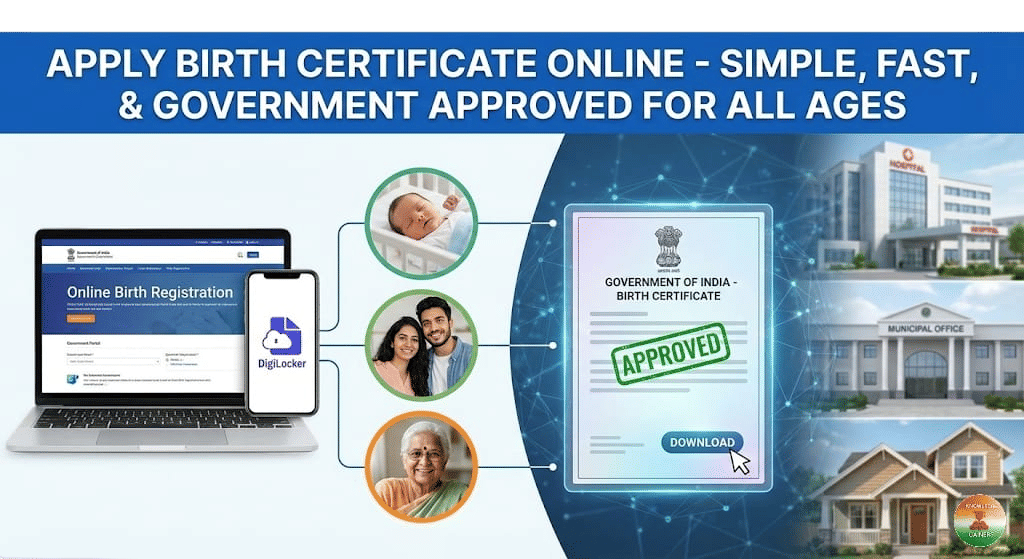
General
12/20/2025
The Easiest Way to Get an Official Birth Certificate from Home: The Secure and Simple Online Digital Registration Process
Applying for a Birth Certificate in India has transformed from a tedious, queue-filled chore into a streamlined digital experience. Whether you are a new parent registering a newborn or an adult (even up to 60 years old) applying for a certificate for the first time, the government’s online Civil Registration System (CRS) and various state portals have made it accessible to everyone.
K Shiva
Read More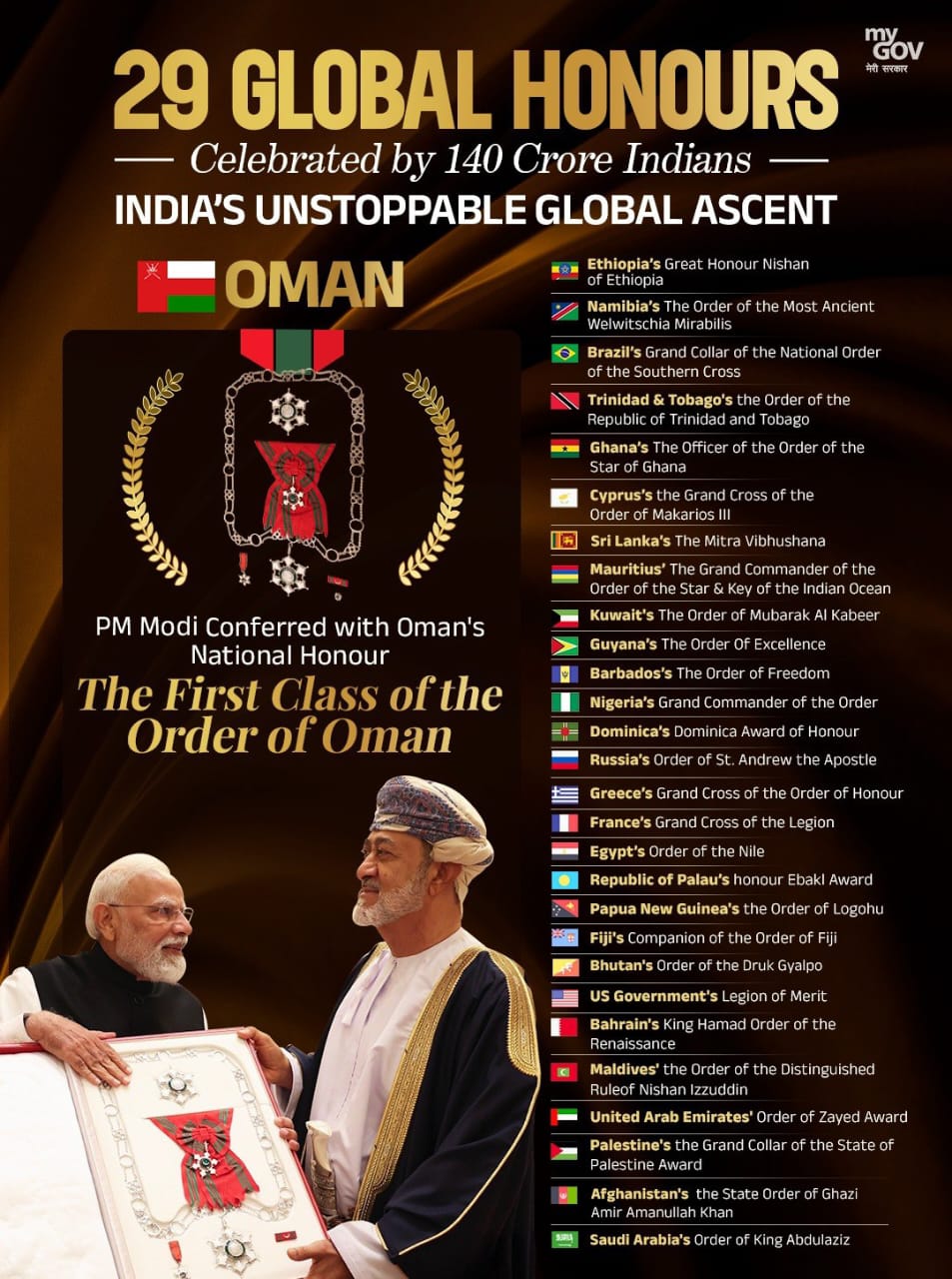
In the realm of international diplomacy, accolades are more than just medals; they are symbols of strengthening alliances, mutual respect, and a nation's rising stature on the world stage. A recent infographic released by MyGov captures a historic milestone in Indian diplomacy: Prime Minister Narendra Modi has now been conferred with 29 Global Honours, a testament to India's deepening ties with nations across every continent.
K Shiva
Read MoreJOB PROCESS
12/20/2025
How to Login & Register for SSC GD 2026
If you are applying for the SSC GD Constable 2026, follow these specific steps to access your dashboard and submit your form.
K Shiva
Read More
Website
12/19/2025
Ignite Your Curiosity: Learn Robotics and Electronics with AtriBOT
In a world driven by technology, understanding how things work is no longer just a hobby—it’s a superpower. At AtriBOT, we are on a mission to make Robotics, Electronics, and Electrical Engineering accessible, affordable, and, most importantly, incredibly fun for students under 18.
K Shiva
Read More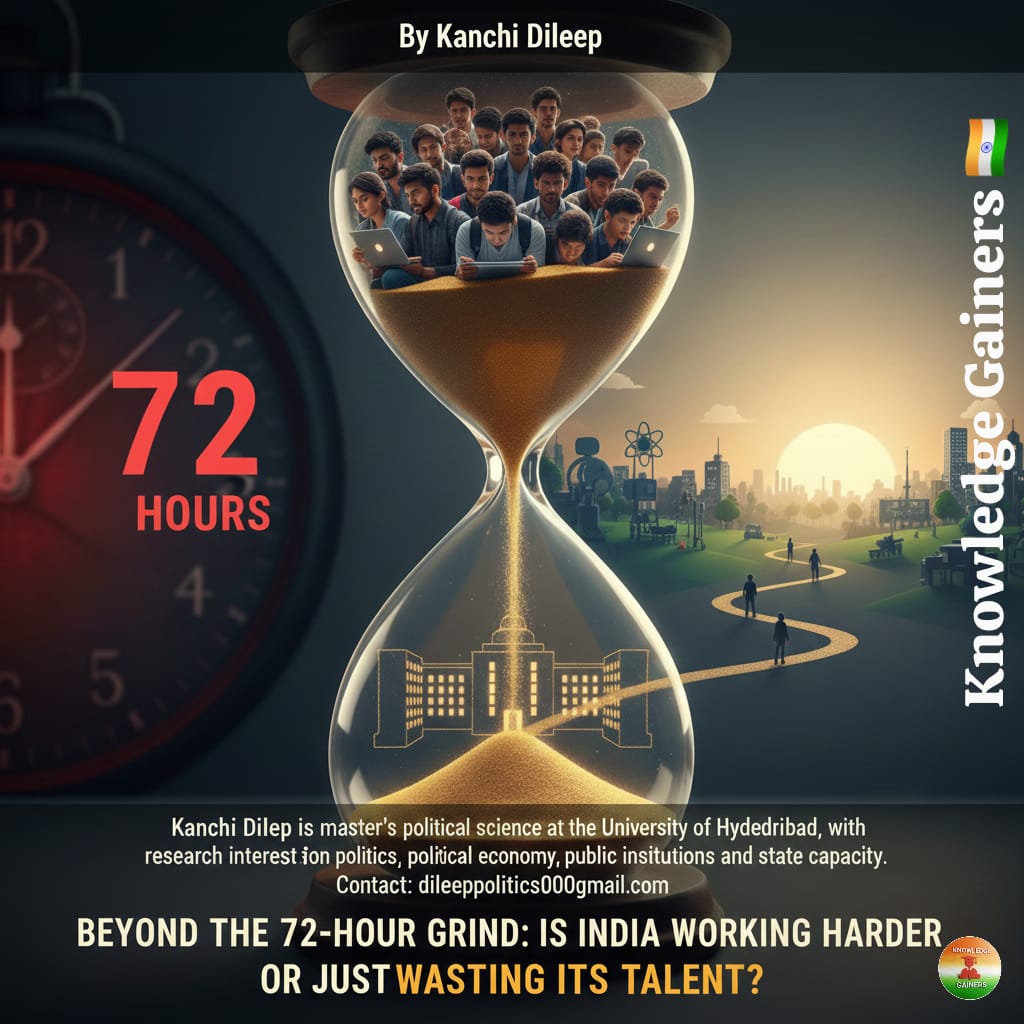
contemporary issues
12/19/2025
Before Asking Youth for 72-Hour Work Weeks, Narayana Murthy Should Ask Why India Squanders its Brightest Minds
Narayana Murthy’s frustration with India’s economic pace is valid, but his solution misses the mark. India’s youth are already working unbelievably hard—some of them in 12-hour study sessions for years on end.
Kanchi Dileep
Read More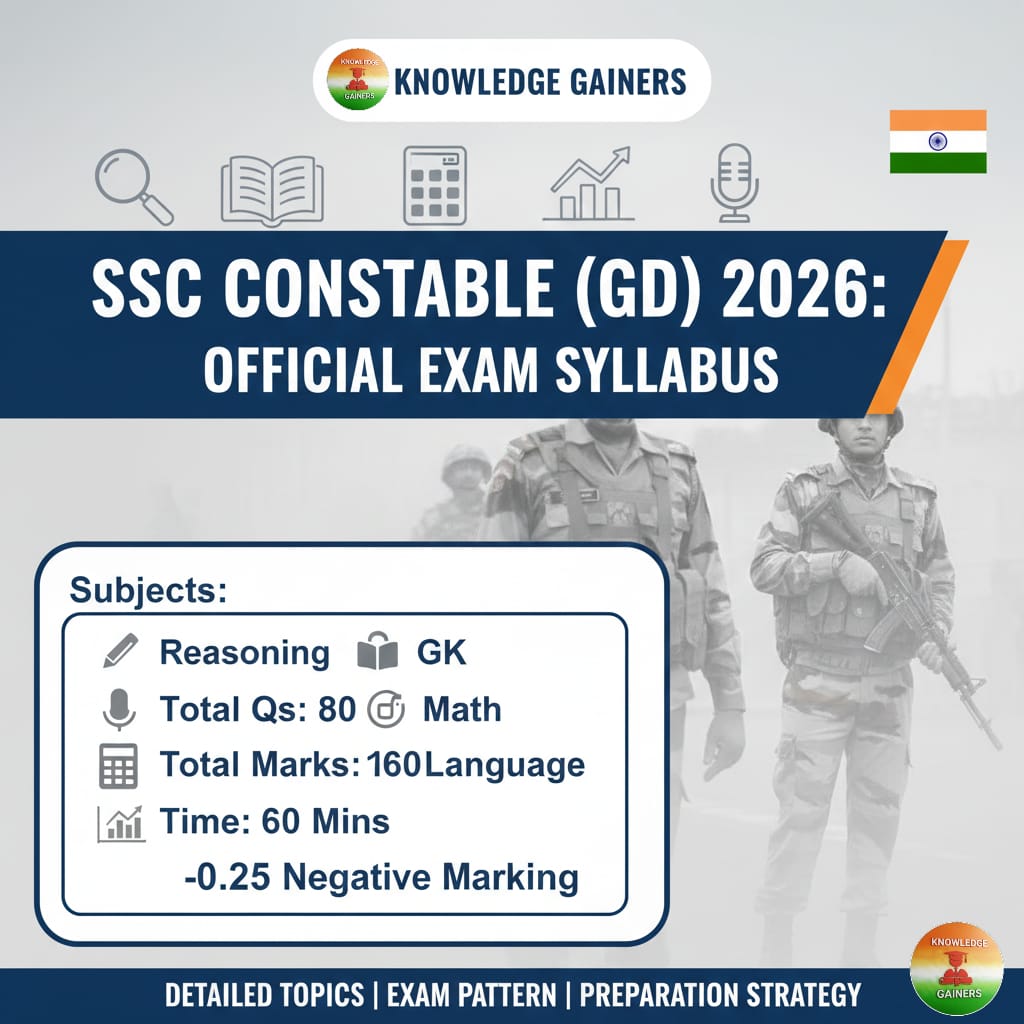
JOB PROCESS
12/18/2025
Detailed Syllabus for SSC Constable (GD) 2026
This blog provides an in-depth look at the SSC Constable (GD) 2026 syllabus, based on the official recruitment notice. The Computer-Based Examination (CBE) is the first and most critical step in the selection process, consisting of 80 objective-type questions worth a total of 160 marks. The examination is divided into four sections, each designed to test specific skills required for a career in the Central Armed Police Forces. All questions are of Matriculation (10th Class) level.
K Shiva
Read More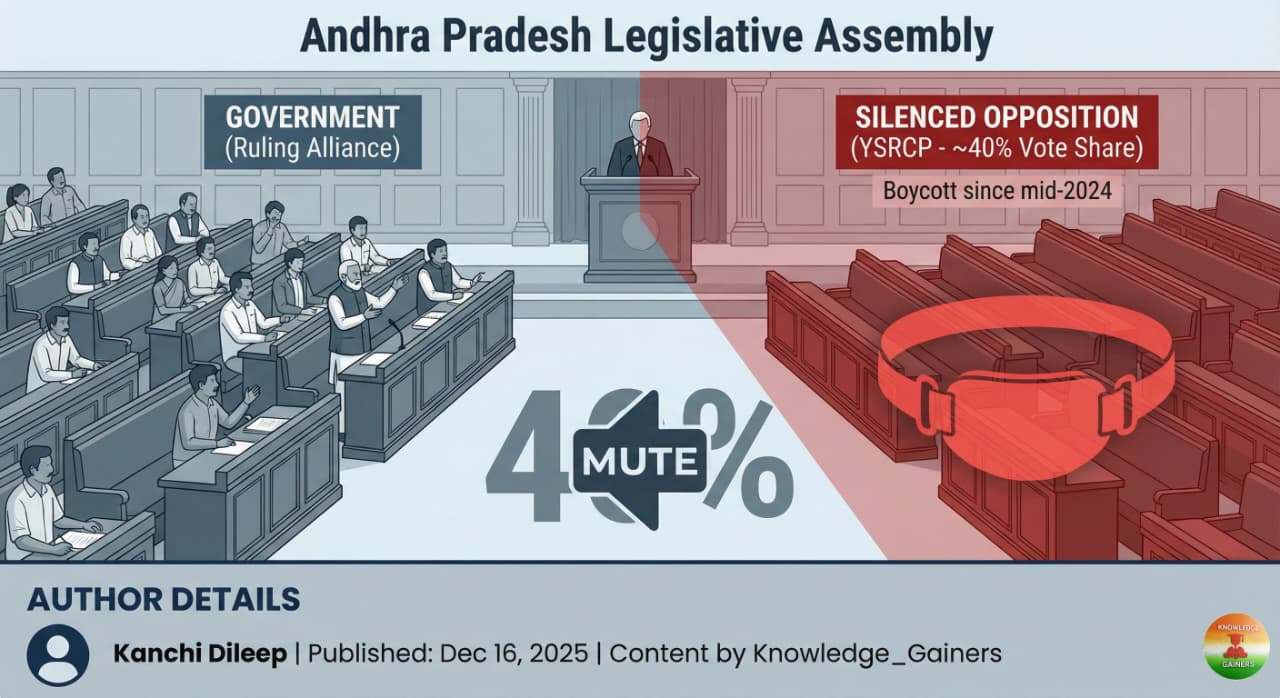
contemporary issues
12/16/2025
Inside Andhra’s one-sided Assembly: How Opposition withdrawal silenced nearly 40 percent of voters
Democracy is often a numbers game, but in Andhra Pradesh, the numbers aren't adding up. Imagine a scenario where nearly 40% of the electorate voted for a party, yet their voice has completely vanished from the state legislature. This isn't a case of suppressed votes or election malpractice—it is a deliberate political silence.
Kanchi Dileep
Read More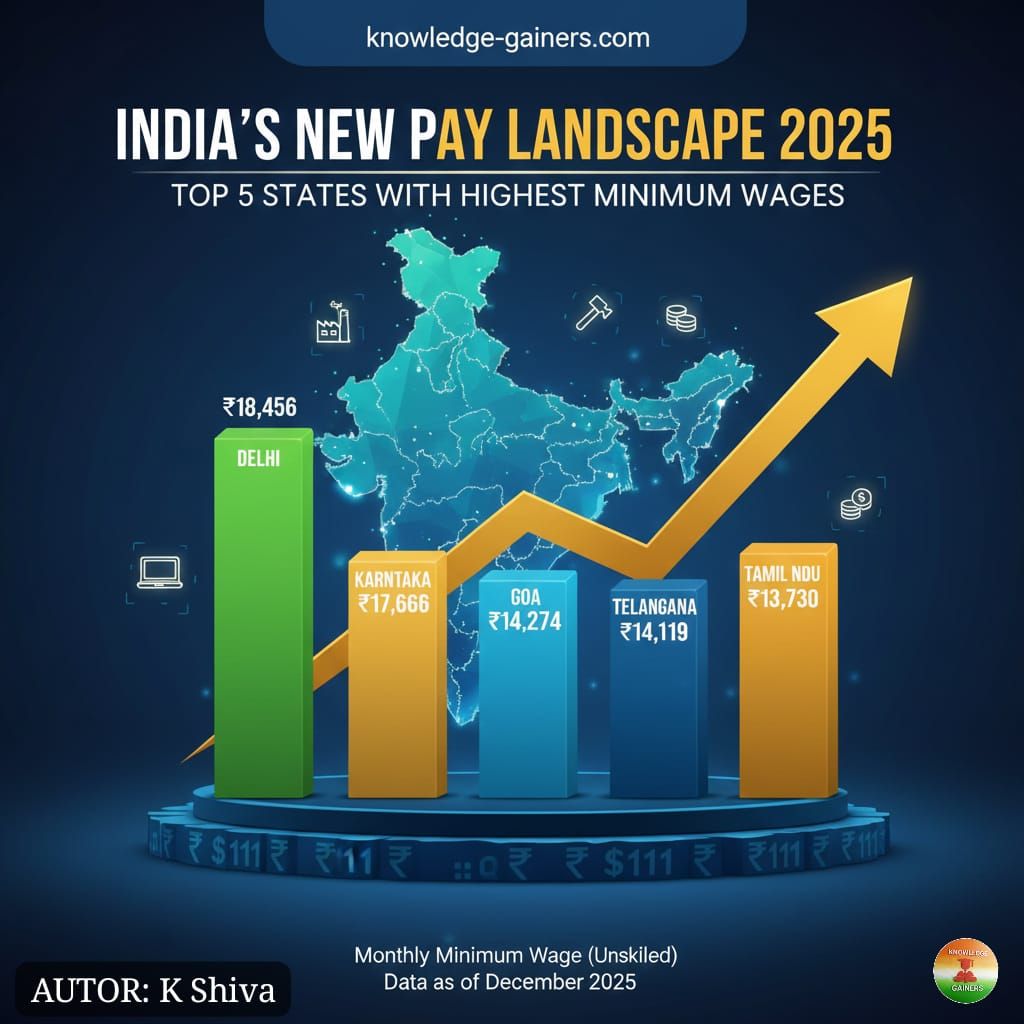
The landscape for workers in India has undergone a transformative shift this year. On November 21, 2025, the government officially implemented the four landmark Labour Codes, marking one of the most significant overhauls in the history of Indian labour legislation. A central pillar of this reform is the 2025 Labour Minimum Wage Hike, designed to address the rising cost of living and ensure that economic growth reaches every rung of the ladder.
K Shiva
Read More