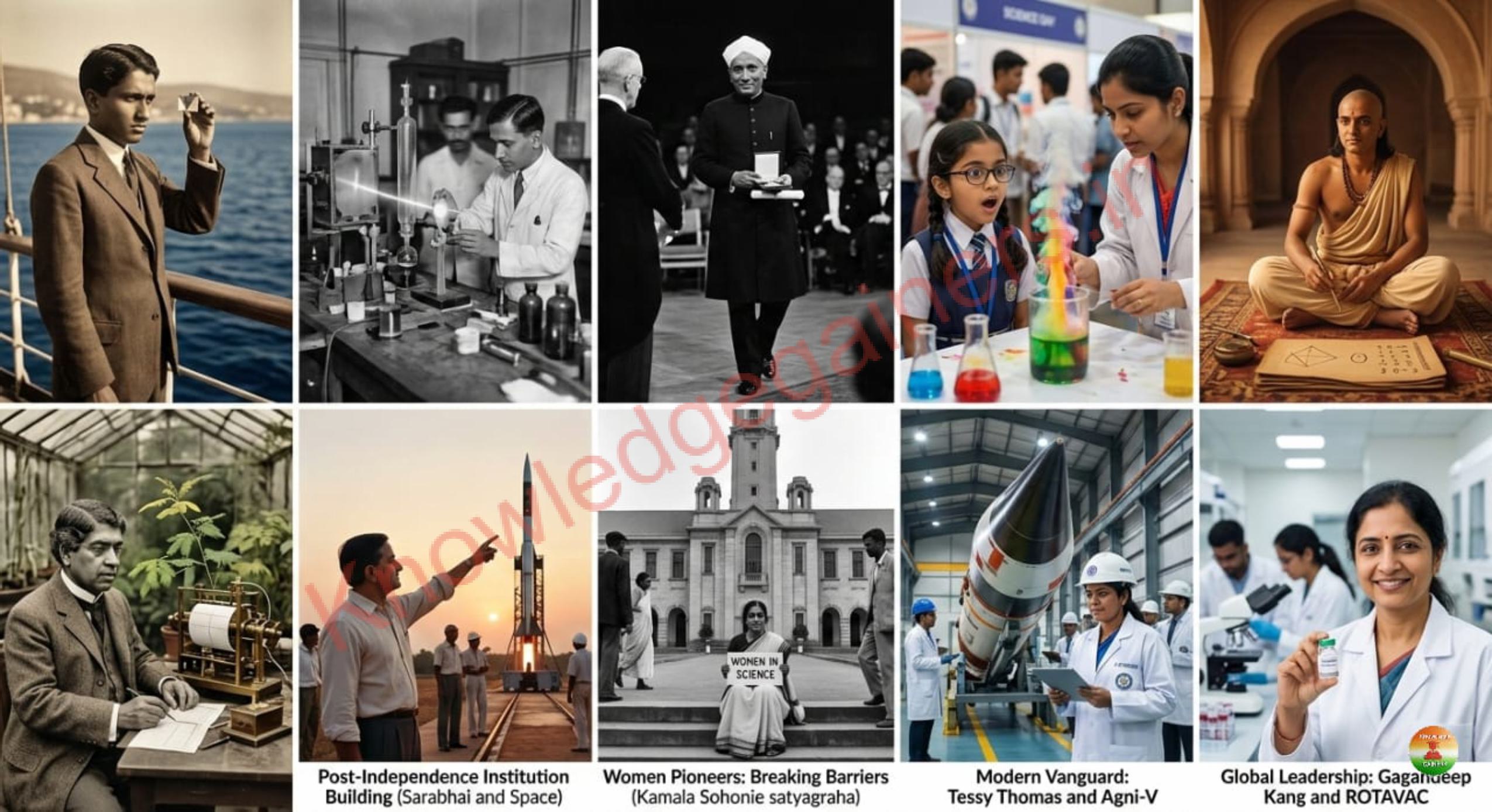
Introduction:
Science serves as the invisible architecture underpinning the advancement of human civilization. From the smartphones that seamlessly connect the global population to the life-saving medical breakthroughs that extend human longevity, rigorous scientific inquiry remains the absolute bedrock of societal progress. In India, the celebration of scientific achievement, rational thought, and intellectual curiosity is encapsulated in a single, highly significant date: February 28. Known globally as National Science Day, this occasion serves not only as a historical tribute to one of the greatest and most paradigm-shifting discoveries in modern physics but also as a nationwide clarion call to foster a scientific temper among the masses.
Creating optimized, accessible, and easily readable scientific content requires a deep adherence to modern web writing practices, ensuring that complex histories are broken down into understandable, engaging narratives. This exhaustive research report fulfills that mandate. It delves deeply into the historical roots of National Science Day, presents an incredibly detailed biographical analysis of Sir C.V. Raman and his monumental Raman Effect, and provides a comprehensive exploration of the vast lineage of Indian scientists. From ancient mathematicians who conceptualized zero to modern-day aerospace engineers and virologists reshaping global health, this document serves as the definitive guide to India's scientific heritage, meticulously structured to align with the specific thematic focus of the year 2026.
The Genesis, History, and Evolution of National Science Day
Every year on February 28, the Indian subcontinent pauses to celebrate National Science Day. Contrary to a widely held misconception among the general public, this date does not mark the birthday of Sir C.V. Raman. Instead, it marks the exact day in the year 1928 when Raman officially observed and announced the discovery of the phenomenon that would later be named the "Raman Effect"—a groundbreaking revelation in the inelastic scattering of light.
The institutionalization and formal recognition of this day, however, began several decades after the discovery itself. In 1986, recognizing the need to bridge the gap between complex laboratory research and public understanding, the National Council for Science and Technology Communication (NCSTC) formally proposed to the Government of India that February 28 be designated as National Science Day. The objective behind this proposal was multi-faceted and deeply rooted in the nation's developmental goals. The government readily accepted the proposal, and the first official National Science Day was celebrated with great fervor across the country on February 28, 1987.
The Core Objectives of the Celebration
The observation of National Science Day goes far beyond mere historical remembrance or academic nostalgia. It is a highly active, forward-looking event designed by policymakers and educators to accomplish several core societal and developmental objectives:
First, it aims to popularize science and technology among the masses. By taking science out of the restrictive confines of academic laboratories and textbooks, the day makes complex scientific concepts accessible to the general public, illustrating how ongoing research directly translates into societal welfare, healthcare improvements, agricultural yields, and daily technological conveniences.
Second, the celebration serves as a powerful motivational tool to inspire the youth. By explicitly highlighting the journeys of indigenous pioneers who achieved global recognition despite operating with severely limited resources and infrastructure, the day demonstrates to young students that rigorous curiosity, unyielding observation, and dedication are the true prerequisites for innovation, rather than merely having access to expensive equipment.
Third, the events foster a deeply ingrained scientific temper. Rooted in logical reasoning, empirical evidence, and analytical thinking, the nationwide celebration encourages citizens to question assumptions, research independently, and validate facts. This is viewed as a critical mechanism for combating superstition, dogma, and scientific illiteracy in a rapidly developing nation.
Finally, National Science Day provides a unified, national platform to showcase India's contemporary achievements. It allows the country to reflect on its remarkable progress in highly complex fields such as space exploration, biotechnology, nuclear physics, and artificial intelligence, thereby instilling a sense of national pride and strategic autonomy.
The Thematic Evolution: A Special Focus on 2026
To ensure that the celebrations remain highly relevant to contemporary global challenges and domestic priorities, the Department of Science and Technology (DST), under the Government of India, announces a specific, targeted theme for National Science Day each year. Historically, these themes have mapped directly onto pressing national and environmental issues. For instance, at the turn of the millennium in 2000, the theme was "Recreating Interest in Basic Science," addressing a noticeable academic shift toward applied engineering. Subsequent years saw themes like "Clean Energy Options and Nuclear Safety" in 2012, reflecting global energy transitions, and "Science for Nation Building" in 2015, highlighting the role of technology in infrastructure and governance.
For National Science Day 2026, the official theme declared by the Ministry of Science and Technology is “Women in Science: Catalysing Viksit Bharat”. This theme represents a strategic and ideological alignment of scientific advancement with India's ambitious vision of becoming a fully developed nation ("Viksit Bharat") by the centenary of its independence in 2047. The 2026 theme explicitly recognizes a fundamental socio-economic truth: sustainable national development and global leadership in innovation are fundamentally impossible without the equal, unhindered, and empowered participation of women researchers, engineers, and scientists. Alongside this gender-focused initiative, there is a strong, continuing undercurrent of "Empowering Indian Youth for Global Leadership in Science and Innovation," ensuring that the demographic dividend of the nation is adequately prepared to lead cutting-edge startups and advanced research initiatives on the global stage.
Deep Dive: Sir C.V. Raman, His Milestones, and the Raman Effect
To truly comprehend the weight and significance of National Science Day, one must deeply analyze the life of the man whose intellectual triumph birthed it. Sir Chandrasekhara Venkata Raman was a physicist whose sheer brilliance and relentless curiosity placed India on the global scientific map during an era when the country was still under the oppressive yoke of British colonial rule and was severely lacking in modern, well-funded research infrastructure.
Early Life, Education, and Prodigious Beginnings
Born on November 7, 1888, in the city of Tiruchirapalli within the Madras Presidency of the British Raj, C.V. Raman was enveloped in an academic and highly intellectual environment from his earliest days. His father, Chandrasekhara Iyer, was a dedicated lecturer in physics and mathematics, a circumstance that deeply fostered and accelerated Raman's early intellectual development and his foundational understanding of the natural world.
Raman was universally recognized as a child prodigy by his educators. He absorbed academic material at an astonishing rate, completing his secondary school education at the remarkably young age of 11. By the time he was 13, he had already enrolled in the prestigious Presidency College in Madras (now Chennai). His academic ascent at the collegiate level was equally rapid and distinguished. He earned his Bachelor of Arts (B.A.) in physics by the age of 15 in 1904, remarkably winning gold medals in both English and Physics. He subsequently completed his Master of Arts (M.A.) in the same field by age 18 in 1907.
Demonstrating an incredibly early aptitude for original, peer-reviewed research, Raman published his first scientific paper in the esteemed Philosophical Magazine while he was still pursuing his master's degree. This was a historic moment in Indian academia, as it marked the very first time a scientific research paper originating from Presidency College was accepted and published in an international scientific journal. During this period, in 1907, he also married Lokasundari Ammal, with whom he would go on to have two children, including Radhakrishnan, who would later become a prominent astrophysicist in his own right.
The Unlikely Career in Finance and the Inevitable Transition to Physics
Despite his obvious genius and his deep, abiding love for physics, scientific research was not viewed as a viable, secure professional career in colonial India at the turn of the 20th century. Yielding to practical and familial pressures, Raman initially took a highly competitive civil service examination and joined the Indian Finance Department as an Assistant Accountant General, stationed primarily in Calcutta.
However, his profound passion for the physical sciences could not be suppressed by bureaucratic ledgers. Operating outside of his demanding, full-time official duties in the finance department, Raman sought out laboratory space to continue his experiments. He found a scientific haven at the Indian Association for the Cultivation of Science (IACS) in Calcutta. His early specialty during this moonlighting phase was the study of optics and, most notably, acoustics. He rigorously studied the mathematical vibrations, harmonic nature, and sound profiles of traditional stringed instruments such as the violin, the Indian veena, and the tambura, as well as uniquely Indian percussion instruments like the tabla and the mridangam.
By 1917, Raman's reputation as a brilliant, self-driven researcher had grown to such an extent that he was offered the prestigious position of Palit Professor of Physics at the University of Calcutta. In a move that demonstrated his absolute devotion to science, he made the bold decision to leave his highly lucrative, secure government job in finance to accept the professorship, fully dedicating the remainder of his life to scientific inquiry.
The Mediterranean Epiphany and the Challenge to Lord Rayleigh
The trajectory of Raman's career, and indeed the history of physics, changed forever in 1921 during his very first voyage to London. He had traveled to the West where his burgeoning reputation in optics and acoustics was already known to prominent English physicists like J.J. Thomson and Lord Rutherford, who received him warmly.

However, the pivotal moment of the trip occurred on his return voyage to Bombay aboard the passenger ship SS Narkunda. During the fifteen-day sea voyage, Raman's incredibly restless and probing mind became utterly fascinated with the deep, mesmerizing blue color of the Mediterranean Sea. At that time, the universally accepted scientific explanation for the color of the sea had been proposed by the eminent Lord Rayleigh, who asserted that the sea's blue color was merely a reflection of the blue color of the sky.
Raman, exhibiting the truest form of scientific temper, was not convinced by this established dogma. Using a simple pocket prism and a polarizing nicol prism that he happened to have with him on the ship, he observed the water directly, isolating it from the sky's reflection. He rapidly concluded that Lord Rayleigh was incorrect; the water molecules themselves were actively scattering light, and it was this molecular scattering that caused the intense blue color. This single, curiosity-driven observation ignited a relentless, years-long pursuit to fully understand exactly how light interacts with transparent molecular mediums.
The Discovery of the Raman Effect
Upon returning to India, Raman, alongside his dedicated team of researchers and students—most notably K.S. Krishnan—spent several years conducting painstaking, highly meticulous experiments on the scattering of light. Operating far from the great, well-funded centers of scientific research in the Western world, Raman achieved his results using surprisingly basic, indigenous laboratory equipment, driven primarily by his unmatched observational skills and intense theoretical focus.
The defining breakthrough finally occurred on February 28, 1928. On this day, Raman conclusively observed and recorded that when a beam of monochromatic light passes through a transparent material (such as a liquid or a gas), the vast majority of the light scatters at the exact same wavelength as the incoming beam. However, a very small fraction of the scattered light fundamentally changes its wavelength, its energy, and its frequency.
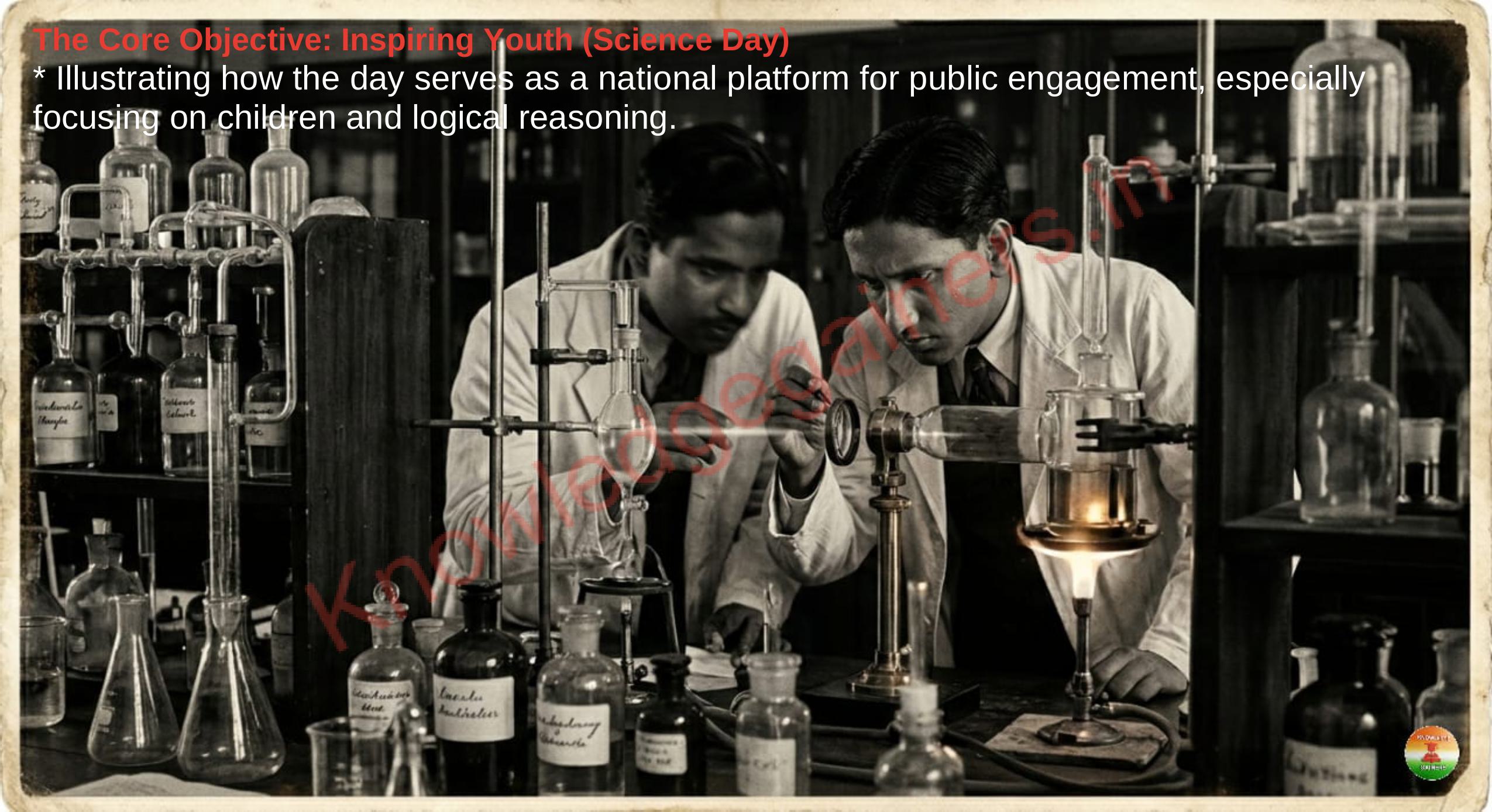
This phenomenon occurs because the incoming photons of light physically collide and exchange energy with the vibrational and rotational states of the molecules they strike—a complex quantum process now known universally as inelastic scattering. Shortly thereafter, on March 16, 1928, Raman formally presented his historic findings in a lecture titled "A New Radiation" to the South Indian Science Association in Bangalore, effectively introducing the Raman Effect to the global scientific community.
The Global Impact and Applications of Raman Spectroscopy
The announcement of the Raman Effect sent shockwaves through the global physics community. It provided a monumental, undeniable piece of physical evidence validating the quantum nature of light, profoundly reshaping the global understanding of molecular physics and structural chemistry.
Because every unique molecule produces a completely specific, mathematically predictable scattering pattern—functioning much like a highly detailed molecular fingerprint—the Raman Effect gave birth to the entirely new analytical field of Raman Spectroscopy. Today, nearly a century later, Raman Spectroscopy remains an indispensable, non-destructive analytical tool utilized across a vast array of cutting-edge disciplines :
Medicine and Healthcare: It is used extensively for real-time, non-invasive tissue analysis, cellular imaging, and early disease detection, allowing doctors to identify biochemical changes before physiological symptoms appear.
Forensic Investigations: Law enforcement and forensic scientists employ it to rapidly identify illicit drugs, chemical explosives, and trace evidence at crime scenes without destroying the highly sensitive original sample.
Chemistry and Material Science: It is crucial for analyzing the structural integrity of complex polymers, cutting-edge nanomaterials, and historical artifacts.
Environmental Studies: Environmental scientists utilize the technology to detect microscopic pollutants, analyze water quality, and monitor atmospheric gases.
Awards, Institutional Legacy, and Final Years
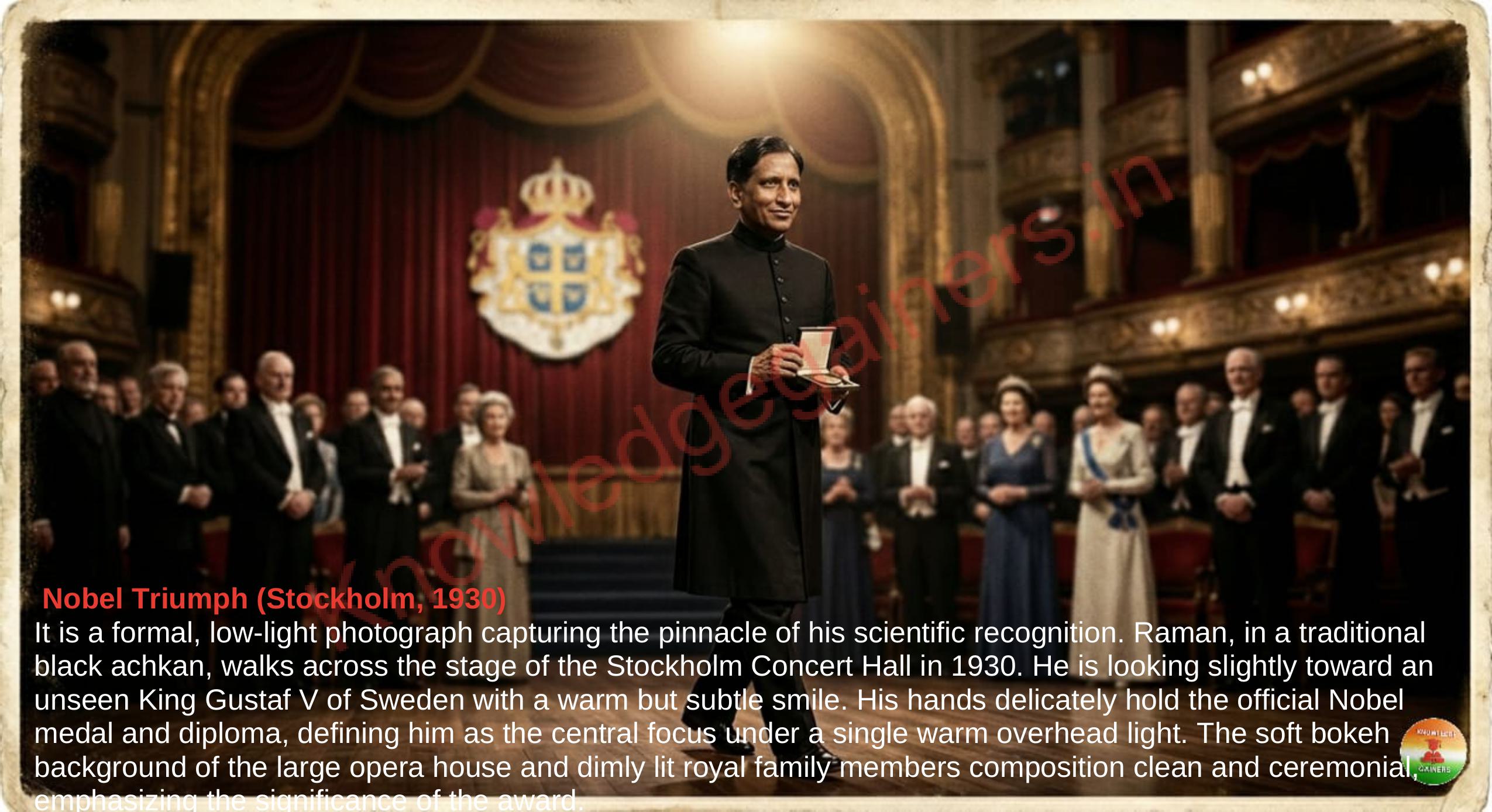
For this sheer paradigm-shifting discovery, Sir C.V. Raman was awarded the Nobel Prize in Physics in 1930. This was an event of massive geopolitical and cultural significance, as it made him the very first Indian, the first Asian, and the first non-white individual to ever receive a Nobel Prize in the sciences, forever shattering the deeply entrenched colonial myth of Western scientific supremacy.
His incredible life and career were subsequently adorned with the highest possible honors and recognitions from across the globe.
Event / Milestone | Year | Details and Awarding Body |
Birth | 1888 | Born on November 7 in Tiruchirapalli, Madras Presidency. |
Academic Excellence | 1904 & 1907 | Earned B.A. at 15 and M.A. at 18 from Presidency College. |
Career Transition | 1917 | Left Finance Dept. to become Palit Professor at Univ. of Calcutta. |
The Voyage | 1921 | Sailed on the SS Narkunda; theorized on the color of the sea. |
Fellowship | 1924 | Elected as a Fellow of the Royal Society (FRS), United Kingdom. |
The Discovery | 1928 | Officially discovered and announced the Raman Effect on February 28. |
Matteucci Medal | 1928 | Awarded by the Italian Society of Sciences. |
Knighthood | 1929 | Granted the title of Knight Bachelor by the British Empire. |
Nobel Prize | 1930 | Awarded the Nobel Prize in Physics by the Nobel Foundation. |
Hughes Medal | 1930 | Awarded by the Royal Society, United Kingdom. |
Directorship | 1933 | Appointed Director of the Indian Institute of Science (IISc). |
Franklin Medal | 1941 | Awarded by the Franklin Institute, United States. |
Institute Founder | 1948 | Founded and became Director of the Raman Research Institute. |
Bharat Ratna | 1954 | Awarded the highest civilian award by the Government of India. |
Lenin Peace Prize | 1957 | Awarded by the Soviet Union for international peace efforts. |
Beyond his personal research accolades, Raman was a formidable and visionary institution builder. He recognized early on that India needed domestic infrastructure to retain its top intellectual talent. He served critical tenures at the University of Calcutta and the Indian Institute of Science (IISc) in Bangalore. In 1948, he founded his own independent facility, the Raman Research Institute, which he directed with unyielding passion until his death. Furthermore, he was instrumental in the founding of the Indian Academy of Sciences, a body that deeply influenced the growth of domestic scientific infrastructure and academic publishing.
Sir C.V. Raman continued his scientific pursuits relentlessly until his final days. In October 1970, he collapsed while working in his beloved laboratory. Despite attending doctors predicting that he had only four hours left to live, Raman's immense willpower allowed him to survive the acute event. A few days later, rejecting a hospital bed, he chose to spend his final moments in the tranquil gardens of the Raman Research Institute, surrounded by the flowers and the natural world he had spent his life attempting to understand. He passed away from natural causes on November 21, 1970. Before dying, he imparted a profound piece of advice to his students regarding the future of Indian science: he implored them never to allow the journals of the Academy to die, noting that domestic academic journals are the true, sensitive indicators of the quality of science being produced in the country, and the ultimate proof of whether scientific inquiry had truly taken root in the national consciousness.
The Grand Tapestry: A Historical Analysis of Indian Scientists
While Sir C.V. Raman rightfully stands as the focal point of National Science Day, his monumental achievements represent merely one brilliant thread in a vast, millennia-spanning tapestry of Indian scientific heritage. From the ancient astrologers mapping the cosmos to the modern space-age engineers launching interplanetary missions, the intellectual output of the Indian subcontinent has continuously and fundamentally expanded the frontiers of human knowledge across all domains of science.
The Historical Architects (500 CE – 1500 CE)
The foundational pillars of global mathematics, astronomy, algorithms, and early medical diagnostics owe a profound, heavily documented debt to early Indian scholars operating during the early and late medieval periods. During the early medieval period spanning 500 to 1000 CE, intellectuals like Varahamihira (5th-6th century CE) established advanced astronomical treatises. The brilliant mathematician and astronomer Brahmagupta (598–688 CE) laid the early theoretical groundwork for algebra and, crucially, formalized the rules for computing with the concept of zero.
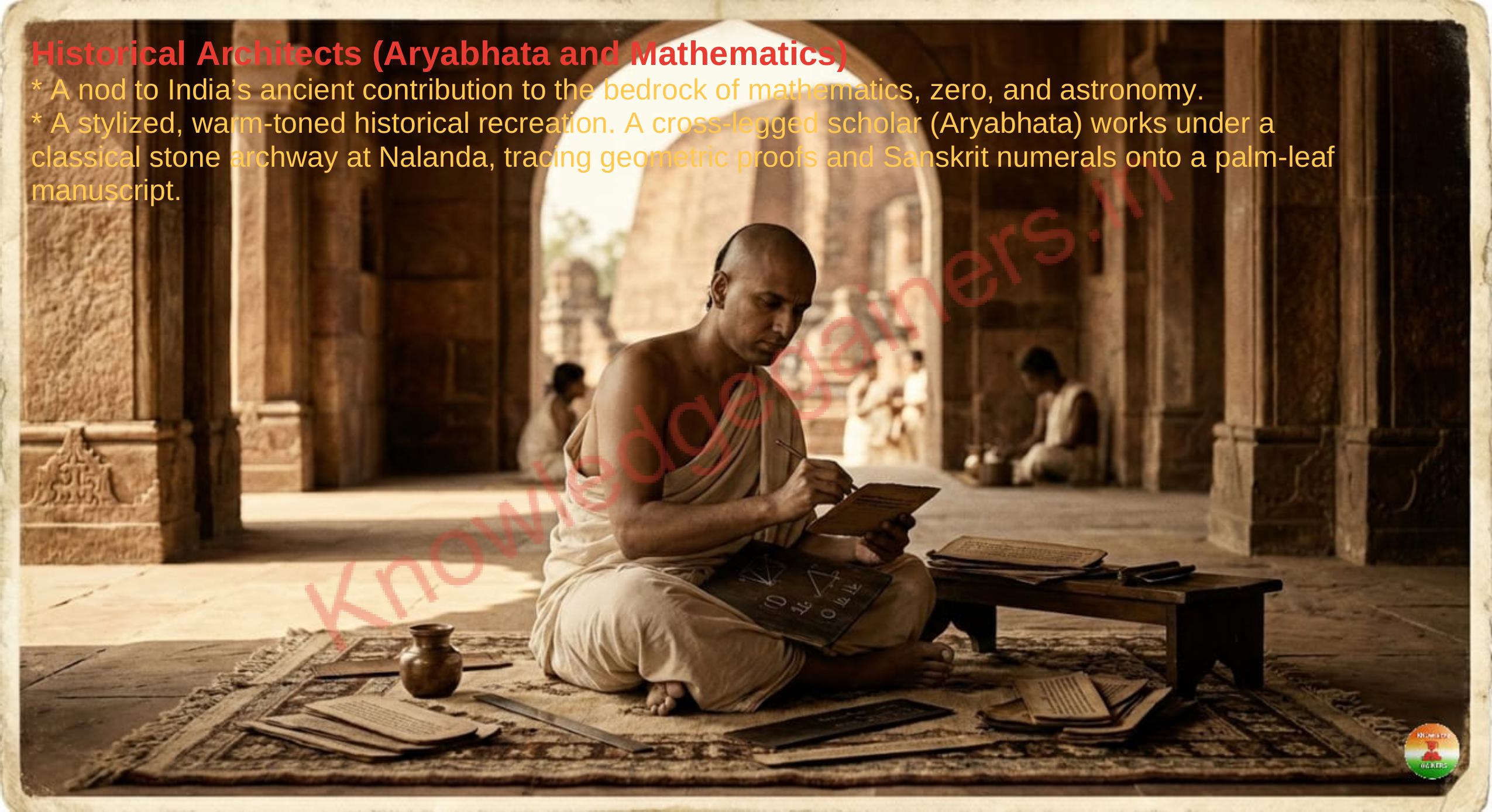
Following him, Bhaskara I (600–680 CE) and Haridatta (6th century CE) made immense strides in planetary tracking and trigonometry, while Lalla (720-790 CE) authored comprehensive texts on planetary motions and eclipses. In the realm of biology and human health, scholars like Vagbhata (6th century CE) and Madhava-kara (7th-8th century CE) codified extensive medical practices and diagnostic techniques that deeply influenced healthcare systems across the Asian continent. Furthermore, figures like Gautama Siddha (8th century CE) were instrumental in cross-cultural knowledge transfer, introducing Indian numerals and the concept of zero to the Tang Dynasty in China, fundamentally altering their mathematical trajectory.
As the region transitioned into the late medieval period (1000–1500 CE), the intellectual momentum continued unabated. The polymath King Bhoja (1000-1070 CE) contributed extensively to astronomy, alchemy, architecture, and mathematics. Sripati (1019-1066 CE) and Brahmadeva (1060-1130 CE) expanded upon astrological and algebraic concepts, while Bhaskara II (1114–1185 CE) made staggering advancements in calculus concepts and planetary orbital mathematics centuries before the formal invention of calculus in Europe. The period also saw the rise of logical frameworks designed by Gangesha Upadhyaya in the 14th century, which established the Navya-Nyaya school of logic.
The Pre- and Post-Independence Titans
As the modern scientific method formally took shape globally, India produced a generation of polymaths, theoretical physicists, and specialized researchers whose inventions and mathematical frameworks remain fundamentally crucial to science today.
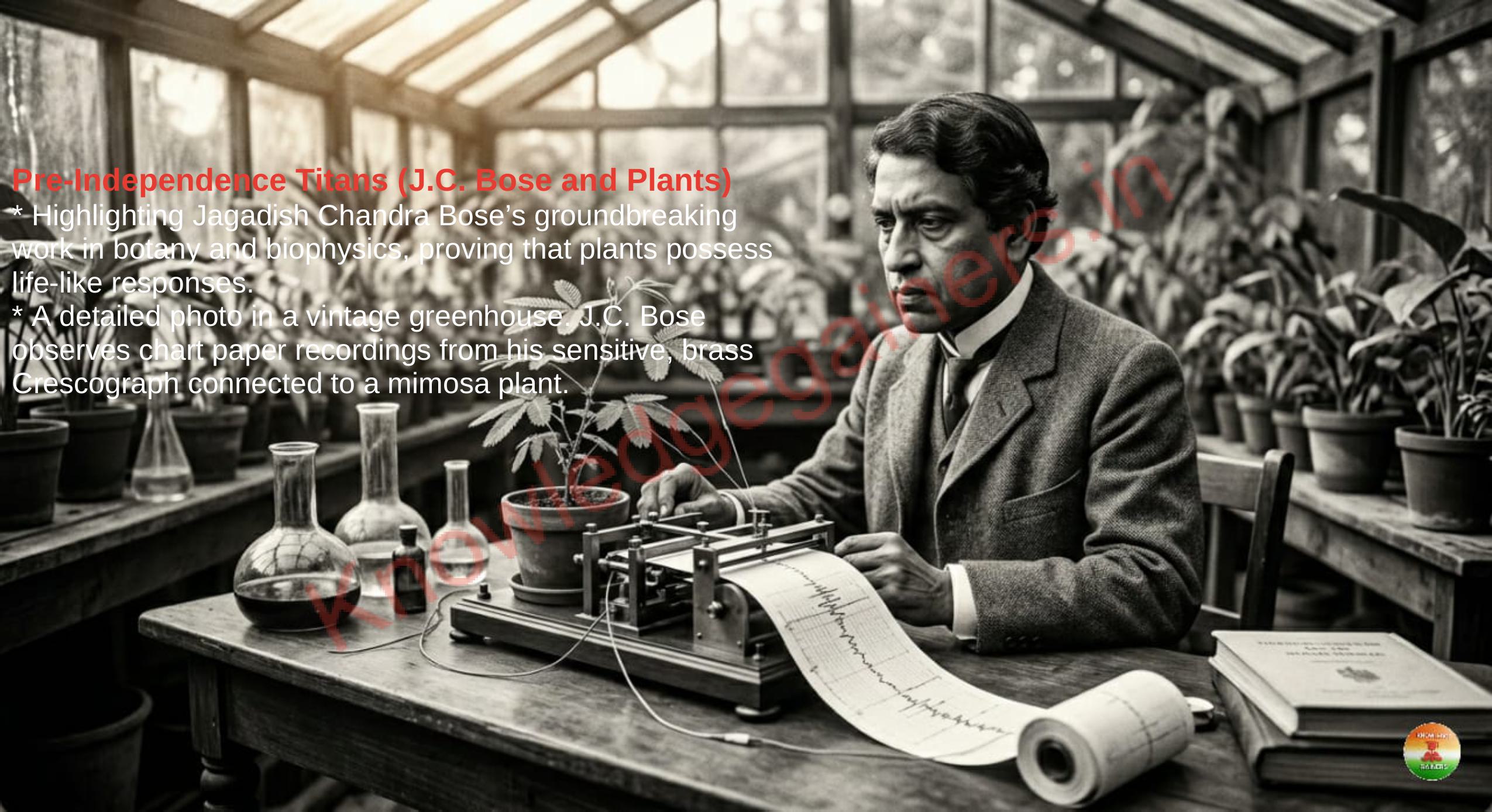
In the realm of physics and astrophysics, the contributions were staggering. Jagadish Chandra Bose, a pioneering intellect who comfortably operated at the complex intersection of physics and botany, was an early pioneer in wireless communication, being the very first to systematically generate and detect microwaves. Transitioning to plant biology, he invented the Crescograph, a highly sensitive device capable of measuring plant growth at extraordinary magnifications, conclusively proving to a skeptical Western audience that plants possess rudimentary nervous systems and respond to environmental stimuli.
Operating in the highly abstract realm of theoretical physics, Satyendra Nath Bose produced work in quantum mechanics that matched the brilliance of Albert Einstein. S.N. Bose's mathematical derivations led directly to the foundation of Bose-Einstein statistics. He collaborated directly with Einstein to predict an entirely new, highly condensed state of matter, now known as the Bose-Einstein Condensate, which occurs at temperatures hovering near absolute zero. Subatomic particles that adhere to his statistical rules are permanently named "bosons" in his profound honor. Similarly, Meghnad Saha, an astrophysicist of immense stature, formulated the Saha Ionization Equation. This fundamental equation allows modern astronomers to definitively relate the spectral classes of observable stars to their actual physical temperatures and chemical compositions, totally transforming the field of stellar astrophysics. Subrahmanyan Chandrasekhar expanded our understanding of the cosmos by mathematically determining the "Chandrasekhar Limit" ($1.44$ times the mass of the Sun). This critical limit dictates that any stable white dwarf star exceeding this mass will inevitably collapse into a dense neutron star or a black hole, a Nobel-prize-winning discovery that forms the basis of our understanding of stellar death.
In the domains of chemistry, biology, and applied mathematics, Indian minds were equally prolific. Srinivasa Ramanujan, a largely self-taught, once-in-a-generation mathematical genius, made profound, staggering contributions to mathematical analysis, infinite series, continued fractions, and the deepest concepts of number theory. His incredibly complex equations, derived through sheer intuition and rigorous logic, are still actively used today in fields ranging from advanced computer algorithms to the physics of black holes. Har Gobind Khorana's pioneering genetic research was vital in deciphering the highly complex genetic code, paving the way for the entire modern fields of biotechnology, genetic engineering, and targeted pharmacology. Venkatraman Ramakrishnan mapped the exact molecular structure and complex functioning of ribosomes—the microscopic biological machines responsible for all protein synthesis in cells—a feat that earned him the Nobel Prize in Chemistry. G.N. Ramachandran revolutionized structural biology by creating the "Ramachandran Plot," an essential visual and mathematical tool that helps biochemists globally study the allowed portions of complex protein structures and understand the mechanics of protein folding. In the environmental sciences, Salim Ali, universally known as the "Birdman of India," pioneered incredibly systematic bird surveys across the subcontinent, fundamentally shaping modern ornithology and advocating fiercely for the protection of biodiversity. Similarly, Dr. Birbal Sahni conducted exhaustive research on ancient plant fossils, providing critical data on the timings of the Himalayan tectonic uplift.
Architects of Modern India's Strategic Autonomy
Following independence in 1947, India faced massive developmental challenges and required highly visionary scientific leaders to build its complex nuclear, space, and defense capabilities entirely from scratch, often facing severe international technology denial regimes.
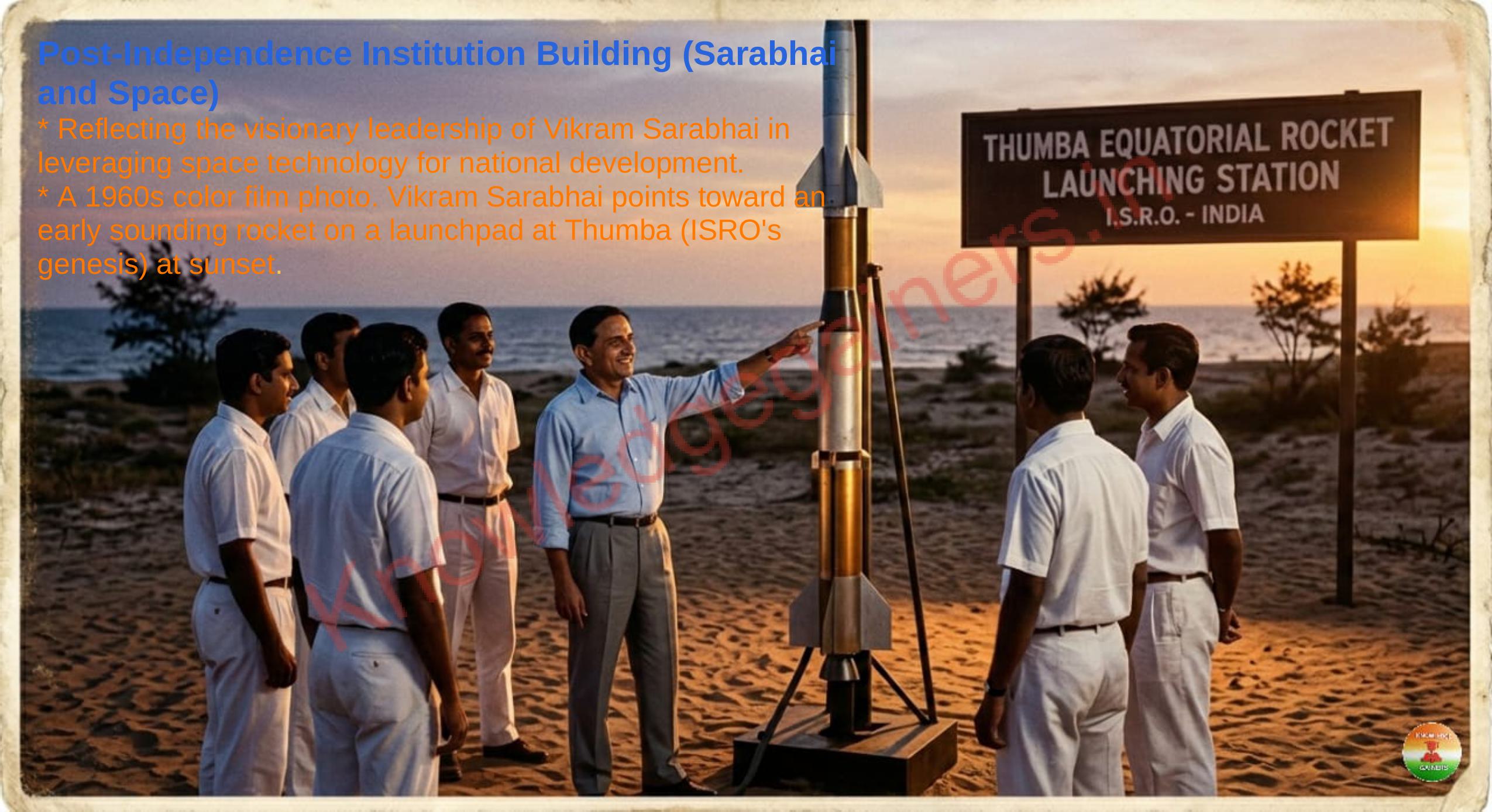
Dr. Homi J. Bhabha, universally and rightly recognized as the "Father of the Indian Nuclear Program," was a brilliant quantum physicist who forcefully convinced the nascent Indian political leadership to invest heavily in advanced nuclear energy research. He personally established the foundational institutes for atomic research in Mumbai, ensuring India rapidly developed the dual capability for peaceful domestic energy generation and strategic nuclear defense. Following in this exact vein of institution building, Vikram Sarabhai emerged as the undisputed architect of the Indian Space Programme. Sarabhai founded the Indian Space Research Organisation (ISRO) with a deeply humanitarian vision; he viewed highly advanced space technology not as a geopolitical luxury, but as an absolute necessity for national development, enabling satellite-based tele-education, precise weather forecasting for farmers, and rapid disaster management.
Decades later, Dr. A.P.J. Abdul Kalam, fondly immortalized as the "Missile Man of India," directed the incredibly complex development of India's indigenous ballistic missile systems, specifically the Agni and Prithvi series, under the ambitious Integrated Guided Missile Development Programme. His mastery of aerospace engineering secured India's borders, and his subsequent tenure as the 11th President of India transformed him into a beloved, universally respected inspirational figure for millions of young Indian students dreaming of careers in science. Furthermore, researchers like Dr. Raja Ramanna played highly significant, hands-on roles in the practical testing and development of India's nuclear technology, cementing the nation's strategic posture globally.
Women in Science: Breaking the Glass Ceiling (The 2026 Focus)
In direct and purposeful alignment with the National Science Day 2026 theme, "Women in Science: Catalysing Viksit Bharat," it is vital to spotlight the remarkable, exceptionally resilient women who defied intense societal prejudice, massive patriarchal barriers, and institutional bias to pioneer high-level research in STEM (Science, Technology, Engineering, and Mathematics).
The Early Pioneers and Mid-Century Trailblazers
Historically, particularly during the 19th and early 20th centuries, Indian women faced almost insurmountable cultural and systemic barriers to formal secondary education, let alone high-level scientific research. Yet, against all odds, several brilliant trailblazers forged a path forward.
Anandibai Joshi (1865–1887) stands as a monumental figure of immense courage. Against intense societal and familial opposition, she became the very first Hindu woman to travel across the oceans to the United States to obtain a medical degree in Western medicine from the Women's Medical College of Pennsylvania, graduating in 1886. Although she died tragically young of tuberculosis at the age of 22, she laid the essential cultural groundwork for women entering the medical profession and wrote extensively to educate Indian women about personal health and hygiene. Around the same era, Kadambini Ganguly (1861-1923) also shattered norms by becoming one of the first female physicians in the country.
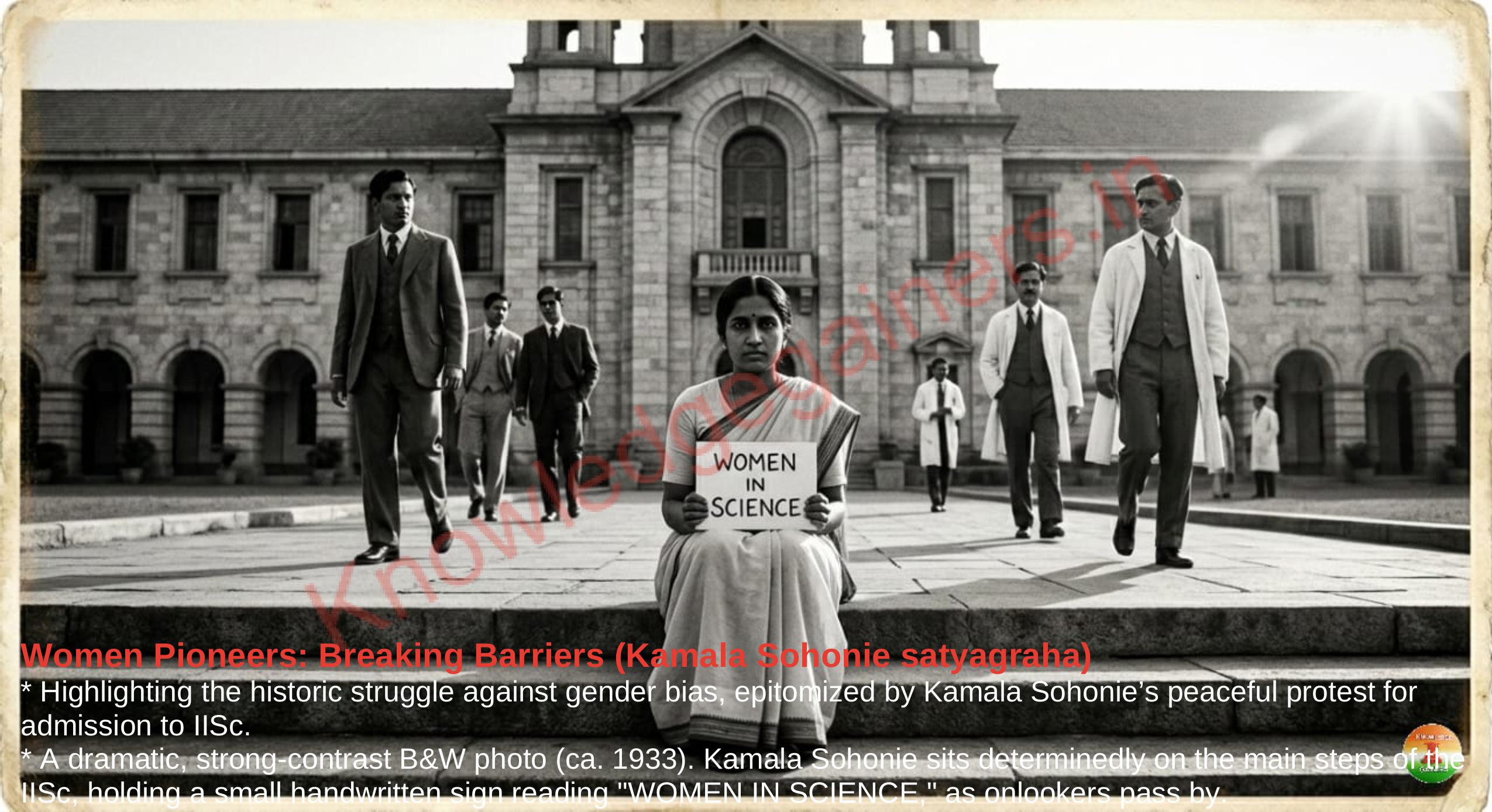
Moving into the 20th century, Kamala Sohonie (1911–1998) became a symbol of intellectual resistance. She was the very first Indian woman to receive a Ph.D. in a scientific discipline. She famously conducted a peaceful, principled satyagraha outside the office of Sir C.V. Raman when he initially refused to admit her to the Indian Institute of Science purely because of her gender. Raman eventually relented, and Sohonie went on to conduct highly influential biochemical research on the enzyme 'cytochrome C' and the nutritional benefits of palm extract (Neera), which helped combat malnutrition in tribal children.
Edavaleth Kakkat Janaki Ammal (1897–1984) was a legendary botanist and plant cytologist whose work had massive economic implications for the country. She made highly significant contributions to genetics, phytogeography, and ethnobotany. Crucially, she developed a new, sweeter, and more robust strain of sugarcane tailored specifically for Indian climatic conditions, a breakthrough that broke India's reliance on imported sugar and revolutionized the domestic agricultural economy. She was honored as a founding fellow of the Indian Academy of Sciences.
Asima Chatterjee (1917–2006) achieved iconic status in the fields of organic and medicinal chemistry. She accomplished numerous historic firsts, most notably becoming the first woman to earn a Doctor of Science (D.Sc.) from an Indian university (Calcutta University) in 1944. Her extensive, rigorous research focused intensely on the complex chemistry of natural products, specifically medicinal plants native to the Indian subcontinent. Her work directly led to the development of highly effective anti-epileptic and anti-malarial drugs, and she served as the first lady president of the Indian Science Congress.
Anna Mani (1918–2001), a brilliant physicist and meteorologist, joined the Meteorological Department in Pune in 1948. Her painstaking, highly technical work in designing, calibrating, and standardizing complex meteorological instruments for measuring solar radiation, ozone levels, and wind energy made India entirely self-reliant in weather forecasting infrastructure.
Other mid-century titans include Kamal Ranadive (1917-2001), who established India's first tissue culture laboratory and advanced cancer research; Rajeshwari Chatterjee (1922-2010), a pioneering woman engineer; Iravati Karve (1905-1970), who broke ground in anthropology; Debala Mitra (1925-2003), the first female Director-General of the Archaeological Survey of India; Bibha Chowdhary (1913-1991), a physicist who had a star named after her; and Purnima Sinha (1927-2015), who earned her doctorate under S.N. Bose and conducted tremendous work in the complex field of X-ray crystallography of clay minerals.
The Modern Vanguard: 21st Century Innovators
The cultural momentum and institutional pathways generated by the early pioneers have accelerated massively in the 21st century. Today, Indian women are not merely participating in science; they are taking the absolute helm of some of the most critical, complex, and high-stakes scientific projects globally.
Dr. Tessy Thomas: The "Missile Woman" of India
Born in April 1963 in the coastal town of Alappuzha, Kerala, Dr. Tessy Thomas grew up near the Thumba Equatorial Rocket Launching Station. Watching rockets regularly soar into the sky, her childhood curiosity ignited a lifelong, intense fascination with aerospace engineering and the physics of flight. After meticulously crafting her academic path by completing her B.Tech at Thrissur Engineering College and an M.Tech in Guided Missiles from the Defense Institute of Armament Technology in Pune, she joined the Defence Research and Development Organisation (DRDO) in 1985.
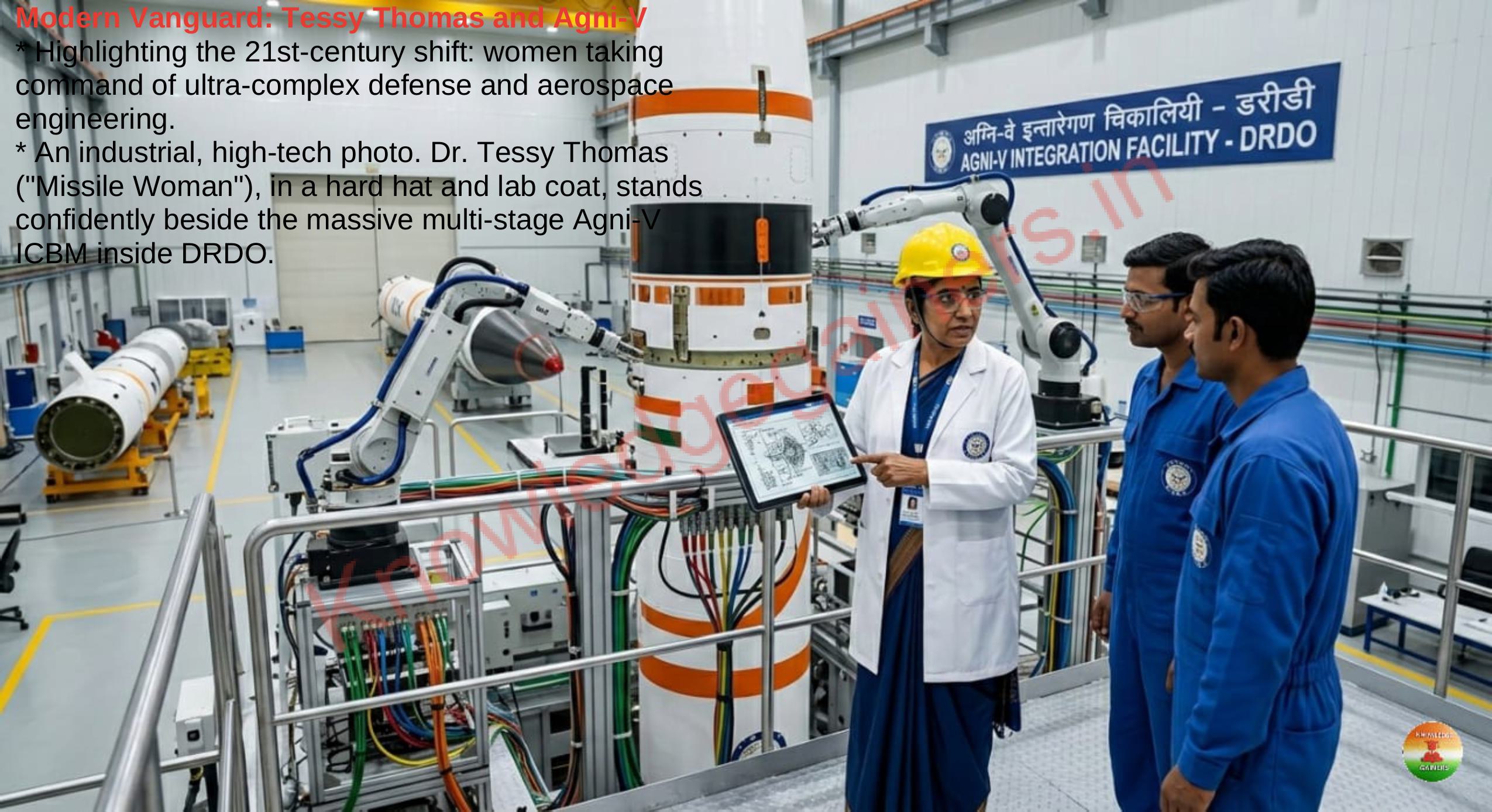
Entering a fiercely male-dominated field—she noted that in 1988, there were only five women working in her entire department—Thomas let her undeniable expertise in solid propellants and complex guidance systems speak for itself. She worked directly under Dr. A.P.J. Abdul Kalam during the early days of the missile program. Her brilliance led to her appointment as the Project Director for the Agni-IV ballistic missile in 2009. She designed incredibly complex guidance schemes that allowed the missile to endure brutal re-entry temperatures exceeding $3000^\circ\text{C}$ without compromising the payload. Following the highly successful test of Agni-IV in 2011, she broke the ultimate defense glass ceiling by being appointed the Project Director for the Agni-V, India's very first intercontinental ballistic missile (ICBM) with a massive strategic range of over 5000 kilometers.
Media outlets quickly and rightfully dubbed her the "Missile Woman of India" and "Agniputri" (Daughter of Fire). Serving as the Director General (Aeronautical Systems) at DRDO from 2018 to 2023, Dr. Thomas's leadership fundamentally altered India's strategic defense posture, earning her the Lal Bahadur Shastri National Award for making India completely self-reliant in missile technology. Beyond the engineering, her journey from a small town to the apex of Indian defense research proved definitively that gender is entirely irrelevant to leading ultra-complex aerospace projects, turning her into a massive role model for initiatives like G20 EMPOWER.
Prof. Gagandeep Kang: Pioneering Global Public Health
In the critical realm of medical science, Dr. Gagandeep Kang is a physician-scientist whose incredibly rigorous work in clinical translational medicine, epidemiology, and microbiology has directly saved countless lives worldwide. From an early age, her scientific temper was nurtured; she and her father actually built a laboratory in their home to conduct chemistry and physics experiments. She went on to complete her MBBS and M.D. in Microbiology from the prestigious Christian Medical College (CMC), Vellore, eventually obtaining her Ph.D. in 1998 and conducting crucial postdoctoral research at the Baylor College of Medicine in Houston.
Returning to India, Kang dedicated her career to deeply understanding enteric diseases (severe intestinal infections) in children. Her most monumental contribution to global health lies in the incredibly extensive, cohort-based epidemiological research she led, which directly supported the development, clinical trials, and widespread introduction of ROTAVAC—India's first completely indigenous rotavirus vaccine. Rotavirus is a leading global cause of severe, often fatal diarrheal disease in infants. The successful development and rollout of this highly affordable vaccine into the national immunization program set a new, towering benchmark for biological research and vaccine manufacturing in the global south.
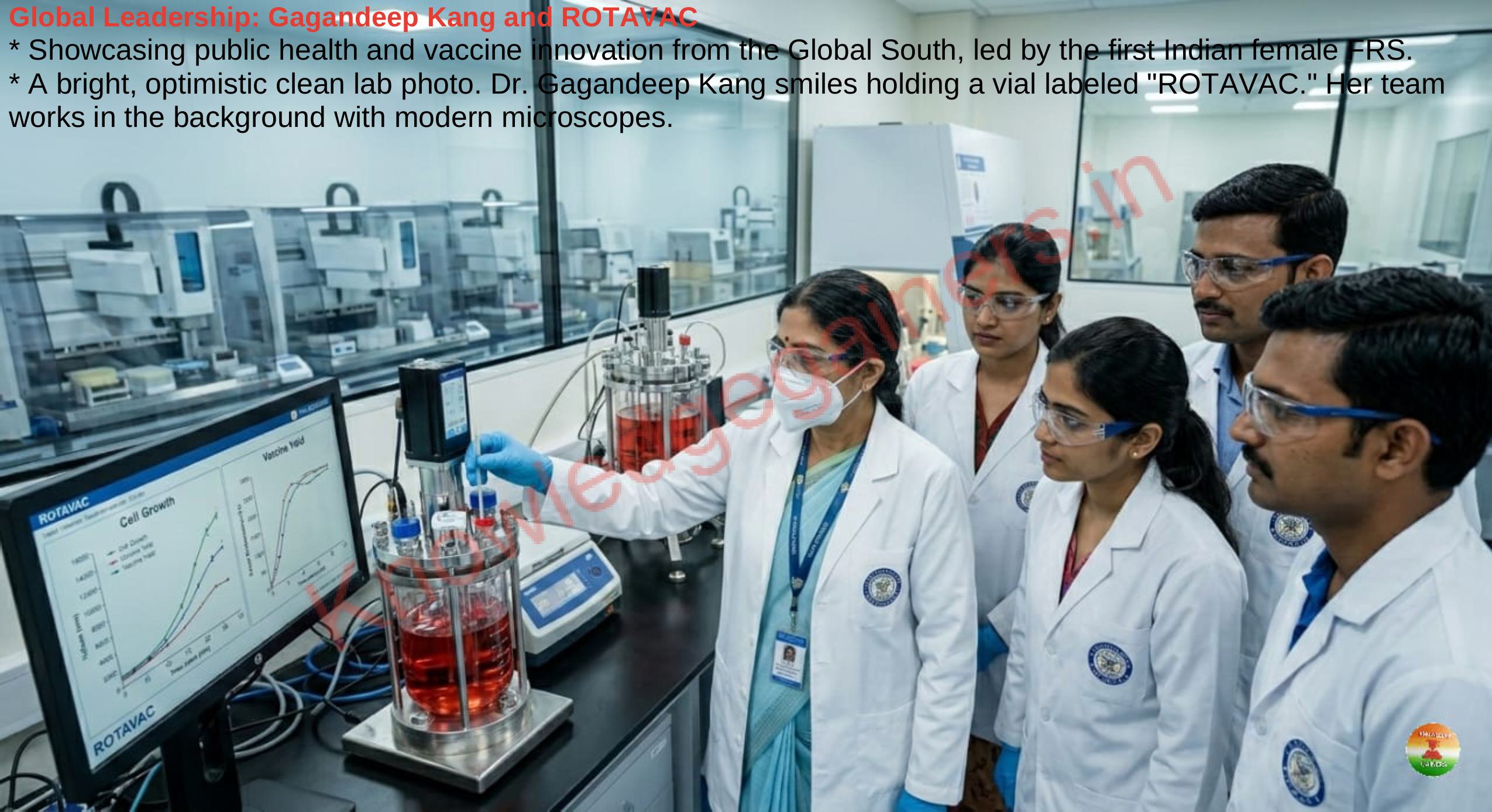
During the dark days of the COVID-19 pandemic, Kang emerged as a highly credible, remarkably clear voice against scientific misinformation, serving on the WHO's global vaccine safety working group and India's National Technical Advisory Group on Immunization. Her staggering intellect and humanitarian impact have been universally recognized at the highest levels: in 2019, she made absolute history by becoming the very first Indian woman scientist to be elected a Fellow of the Royal Society (FRS) in the institution's 359-year history. She is also a recipient of the Infosys Prize in Life Sciences and was awarded the prestigious 2024 John Dirks Canada Gairdner Global Health Award for her lifetime of dedication to pediatric health.
Other modern stalwarts include Renu Swaroop, who established India's largest Microbial Culture Collection; Archana Bhattacharyya, the first woman Director of the Indian Institute of Geomagnetism; Manju Sharma, the pioneering first woman Secretary of the Department of Biotechnology; Ketayun Ardeshir Dinshaw, honored with the Padma Shri for her evolution of cancer radiation therapy; and Bimla Buti, an award-winning plasma physicist who conducted pioneering research on solitary waves and chaos theory.
The Complete Master Reference: Notable Indian Scientists and Their Discoveries
To provide a highly readable, impeccably structured reference guide—adhering to the absolute best practices for comprehensive data presentation and SEO readability—the following exhaustive table encapsulates the most prominent scientists across the entirety of India's history, detailing their eras, their specific domains, and their most critical milestones.
Scientist Name | Era / Century | Field of Expertise | Detailed Contributions, Discoveries, and Milestones |
Aryabhata | 5th Century CE | Mathematics & Astronomy | First to approximate Pi accurately; calculated Earth's rotation; early concepts of trigonometry. |
Varahamihira | 6th Century CE | Astronomy | Authored extensive, foundational treatises on planetary movements and astrology. |
Brahmagupta | 7th Century CE | Mathematics | Formally established the early algebraic rules for computing with the number zero. |
Vagbhata | 6th Century CE | Medicine | Codified Ayurvedic practices and advanced diagnostic medical techniques in ancient India. |
Gautama Siddha | 8th Century CE | Mathematics | Introduced the concept of zero and Indian numerals to the Tang Dynasty in China. |
Bhaskara II | 12th Century CE | Mathematics & Astronomy | Made staggering advancements in calculus concepts and planetary orbital mathematics. |
Anandibai Joshi | 19th Century | Medicine | Broke immense cultural barriers as the first Hindu woman to obtain a Western medical degree (1886). |
Jagadish Chandra Bose | 19th - 20th C. | Physics & Botany | Invented the highly sensitive Crescograph; pioneered early microwave generation and wireless tech. |
Prafulla Chandra Ray | 19th - 20th C. | Chemistry | Renowned academician who established the foundations of modern Indian chemical industries. |
Srinivasa Ramanujan | 20th Century | Mathematics | Produced groundbreaking, universally utilized work in infinite series, continued fractions, and number theory. |
C.V. Raman | 20th Century | Physics (Optics) | Discovered the Raman Effect (inelastic scattering of light); awarded the 1930 Nobel Prize in Physics. |
Satyendra Nath Bose | 20th Century | Quantum Physics | Formulated Bose-Einstein statistics; collaborated with Einstein to conceptualize the Bose-Einstein Condensate. |
Meghnad Saha | 20th Century | Astrophysics | Formulated the highly critical Saha Ionization Equation, used globally to analyze stellar atmospheres. |
Homi J. Bhabha | 20th Century | Nuclear Physics | Universally known as the Father of the Indian Nuclear Program; established the entire atomic energy framework. |
Vikram Sarabhai | 20th Century | Space Science | Architect of the Indian Space Programme; founder of ISRO; pushed for satellite communications. |
Salim Ali | 20th Century | Ornithology | Known as the "Birdman of India"; pioneered systematic bird surveys and massive biodiversity conservation efforts. |
Birbal Sahni | 20th Century | Paleobotany | Conducted exhaustive research on ancient plant fossils, determining the precise timings of the Himalayan uplift. |
Har Gobind Khorana | 20th Century | Molecular Biology | Deciphered how the genetic code dictates protein synthesis; awarded the 1968 Nobel Prize. |
Subrahmanyan Chandrasekhar | 20th Century | Astrophysics | Discovered the Chandrasekhar Limit for collapsing white dwarf stars; awarded the 1983 Nobel Prize. |
G.N. Ramachandran | 20th Century | Biophysics | Created the Ramachandran Plot, a tool utilized globally to understand protein structures and molecular folding. |
Janaki Ammal | 20th Century | Botany | Renowned plant cytologist; developed highly robust, sweet sugarcane strains; studied ethnobotany. |
Kamala Sohonie | 20th Century | Biochemistry | First Indian woman to earn a Ph.D. in science; heavily researched the enzyme cytochrome C and Neera extract. |
Anna Mani | 20th Century | Meteorology | Designed and meticulously standardized meteorological instruments for tracking solar and wind energy. |
Asima Chatterjee | 20th Century | Organic Chemistry | First female D.Sc. in India (1944); rigorously researched medicinal plants, leading to vital antimalarial drugs. |
A.P.J. Abdul Kalam | 20th - 21st C. | Aerospace Engineering | Known as the "Missile Man of India"; led critical defense missile launches (Agni/Prithvi); served as 11th President. |
Venkatraman Ramakrishnan | 21st Century | Structural Biology | Precisely mapped the complex molecular structure of the ribosome; awarded the 2009 Nobel Prize in Chemistry. |
Raj Reddy | 21st Century | Computer Science | Conducted highly pioneering, foundational work in Artificial Intelligence and speech recognition software systems. |
C.N.R. Rao | 21st Century | Chemistry | Made monumental, internationally recognized contributions to solid-state chemistry and structural materials. |
Tessy Thomas | 21st Century | Aerospace Engineering | "Missile Woman of India"; Project Director for the Agni-IV and Agni-V ICBMs; overcame massive gender barriers. |
Gagandeep Kang | 21st Century | Microbiology | First Indian woman FRS; played a highly critical role in developing the ROTAVAC rotavirus vaccine. |
Renu Swaroop | 21st Century | Biotechnology | Established the Microbial Culture Collection, serving as India's absolute largest microbial resource center. |
Bimla Buti | 20th - 21st C. | Plasma Physics | Conducted award-winning, pioneering research on complex solitary waves, solitons, and chaos theory. |
Cultivating the Scientific Temper: Celebrations, Outreach, and Societal Impact
The execution of National Science Day is a massive logistical and educational undertaking that essentially transforms the entire country into a massive, highly interactive laboratory for a week. Recognizing that modern content consumption habits—especially among the youth—prioritize high readability, interactivity, and engaging visual formats, scientific institutions heavily leverage multimedia tools, live demonstrations, and compelling messaging to capture the public's imagination.
Nationwide Activities and Educational Initiatives
During the week surrounding February 28, thousands of schools, local colleges, and India's absolute top-tier research institutions completely open their doors to the general public. Notable entities such as the Indian Institute of Science Education and Research (IISER) in Pune, various Council of Scientific and Industrial Research (CSIR) laboratories, and the Indian Institute of Geomagnetism (IIG) orchestrate highly detailed public outreach programs.
Typical celebrations and pedagogical exercises include:
Live Scientific Demonstrations: Real researchers perform live, simplified demonstrations of the Raman Effect using basic lasers, showcase complex chemical reactions, and explain Archimedes' Principle or the Tyndall effect to completely demystify laboratory work for young, impressionable students.
Competitions and Hackathons: To heavily promote analytical communication and logical formatting, schools host widespread essay writing, elocution, "Sit & Draw" competitions (often themed around national development like "Bharat Nirman"), and science quizzes. More advanced technical institutions host intense weather hackathons for teachers and students, STEM tinkering demonstrations, and robotics challenges.
Public Outreach and Astronomy: Mobile science units, such as the famous Vigyan Rail, traverse the country. Planetariums and astronomy clubs organize highly popular night-sky watch programs, where students engage directly in telescope making and view solar flares, sunspots, and lunar craters, fundamentally altering their perspective of the cosmos. The "Science Communicators' Forum" even organizes extensive science walks through culturally significant academic areas in cities like Kolkata.
Career Awareness and Skill Building: By explicitly exposing students to highly diverse, non-traditional fields—ranging from geomagnetism and paleobotany to artificial intelligence and plasma physics—the day acts as a highly critical, nationwide career counseling mechanism, actively guiding the next massive demographic generation into specialized STEM professions.
At the absolute apex of the national celebration, the Union Ministry of Science and Technology's Department of Science and Technology typically hosts a massive, highly publicized national-level event, often located at Vigyan Bhawan in New Delhi. Here, state-level science communicators, brilliant young researchers, and lifetime achievers are officially honored with national awards, ensuring that scientific excellence is recognized with the same cultural reverence as political or athletic achievement.
The sociological impact of these incredibly widespread celebrations cannot be overstated. By actively bringing the abstract concepts of the universe down to the tangible level of the classroom and the public square, National Science Day actively builds the cognitive infrastructure of the nation. It aggressively fights back against the shadows of superstition and dogma, replacing them with the illuminating light of the scientific method.
Conclusion: The Horizon of Indian Science
National Science Day is infinitely more profound than a mere commemorative date marked on a calendar; it is a highly dynamic, living, and breathing tribute to the absolute power of human curiosity and intellectual resilience. Sir C.V. Raman’s incredible, arduous journey—from staring intently at the deep blue waters of the Mediterranean Sea from the deck of a ship, to rigorously manipulating simple prisms in a modest Calcutta laboratory, to eventually receiving the Nobel Prize in Physics on the world stage—perfectly encapsulates the very essence of scientific inquiry. His life proves undeniably that the most profound truths of the universe are very often hidden in plain sight, merely waiting for a highly observant, unyielding mind to decode them.
The specifically chosen 2026 theme, "Women in Science: Catalysing Viksit Bharat," acts simultaneously as a powerful historical mirror and a strategic future compass. It forces the nation to reflect deeply upon the incredibly difficult historic struggles and the magnificent, hard-won triumphs of early female pioneers like Janaki Ammal, Kamala Sohonie, and Asima Chatterjee. Simultaneously, it points aggressively and optimistically toward a highly advanced future led by brilliant modern visionaries like Dr. Tessy Thomas and Dr. Gagandeep Kang.
By continually, year after year, bridging the vast gap between high-level, complex academic research and everyday public understanding, National Science Day ensures that the monumental legacy of India's ancient mathematical astronomers, its pre-independence physics titans, and its cutting-edge modern missile engineers will continue to deeply inspire future generations. Through the sustained, aggressive cultivation of a nationwide scientific temper, India actively and meticulously engineers its unstoppable ascent as a premier global hub for deep-tech innovation, ethical research, and equitable, sustainable human development.
Join our WhatsApp and Telegram Channels
Get Knowledge Gainers updates on our WhatsApp and Telegram Channels