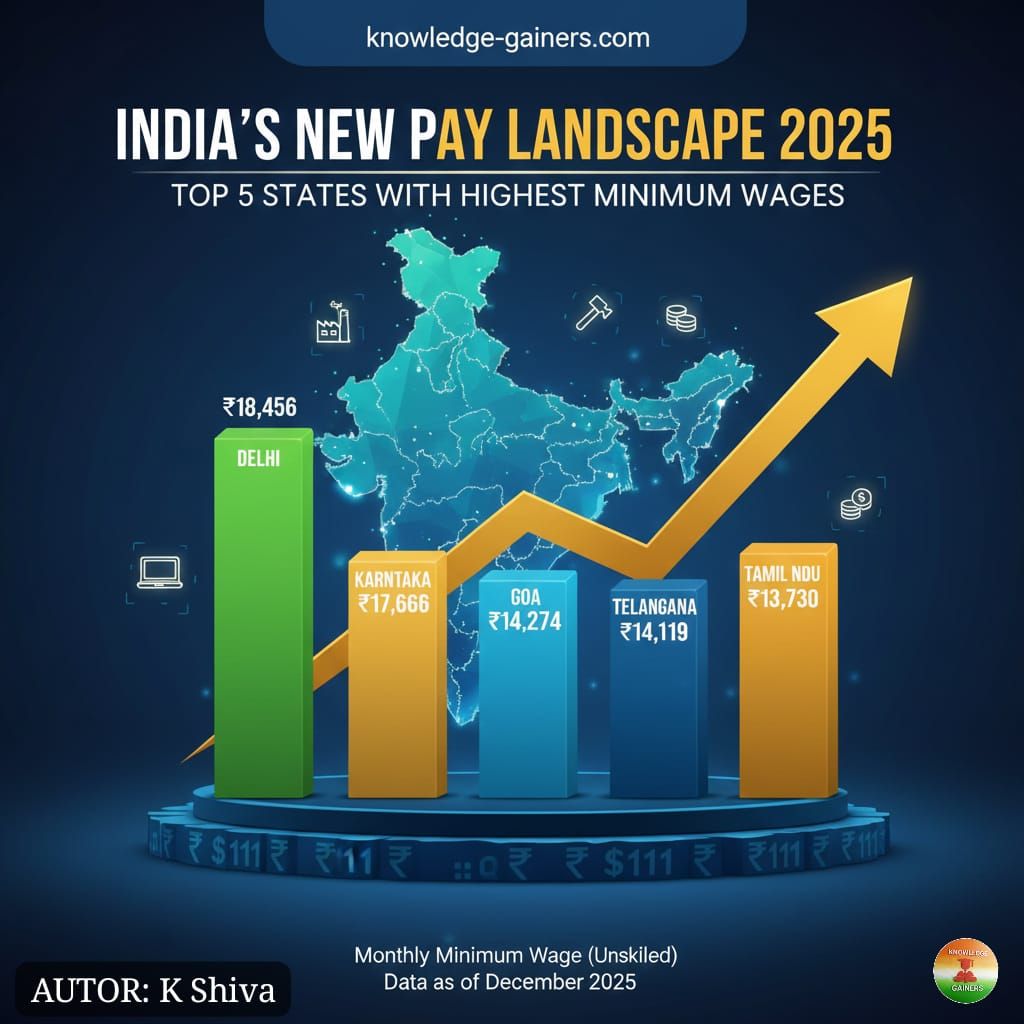
The landscape for workers in India has undergone a transformative shift this year. On November 21, 2025, the government officially implemented the four landmark Labour Codes, marking one of the most significant overhauls in the history of Indian labour legislation. A central pillar of this reform is the 2025 Labour Minimum Wage Hike, designed to address the rising cost of living and ensure that economic growth reaches every rung of the ladder.
From unskilled labourers to highly skilled technicians, millions of workers in both the organized and unorganized sectors are now seeing a direct impact on their take-home pay. Let’s break down exactly what has changed and how these new rates are structured.
Why the Minimum Wage Was Revised in 2025
The revision wasn't just a routine update; it was a strategic move to protect the purchasing power of the Indian workforce. Several factors influenced this hike:
Inflation Control: With the prices of essential goods, rent, and fuel seeing an upward trend, the government reviewed the Consumer Price Index (CPI) to adjust the Variable Dearness Allowance (VDA).
The Transition to "Living Wages": In collaboration with the International Labour Organization (ILO), India is moving away from a mere "subsistence" minimum wage toward a "Living Wage"—an amount sufficient to afford a decent standard of living, including healthcare and education.
Labour Code Implementation: The new codes introduce a National Floor Wage, ensuring that no state can set its minimum wage below this baseline.
Updated Minimum Wage Salary Charts for 2025
The 2025 structure is divided into categories based on skill levels. While exact rates vary by state (for example, Delhi and Karnataka offer higher rates due to urban costs), the Central Sphere benchmarks provide a clear picture of the increase.
Worker Category | Approx. Daily Wage 2024 | Revised Daily Wage 2025 | Estimated Monthly Wage 2025 |
Unskilled | ₹350 | ₹514 - ₹783 | ₹13,364 - ₹20,358 |
Semi-Skilled | ₹380 | ₹562 - ₹868 | ₹14,612 - ₹22,568 |
Skilled | ₹420 | ₹610 - ₹954 | ₹15,860 - ₹24,804 |
Highly Skilled | ₹650 | ₹675 - ₹1,035 | ₹17,550 - ₹26,910 |
Note: The monthly wage is typically calculated based on 26 working days, accounting for four paid weekly offs.
Key Features of the New Wage Structure
1. The Variable Dearness Allowance (VDA)
A major part of the 2025 hike is the adjustment of the VDA. For example, in the agricultural sector, the VDA was revised based on an 11.33-point increase in the Consumer Price Index, directly boosting the daily earnings of rural workers.
2. Regional and Zonal Variations
To account for the "sky-high" costs in metro hubs, states like Maharashtra and Gujarat use a zonal system:
Zone I: Major municipal corporations (e.g., Mumbai, Ahmedabad) where wages are highest.
Zone II & III: Smaller towns and rural areas with slightly lower baselines.
3. Formalization of the "Gig Economy"
For the first time, the 2025 labour updates extend social security and wage protections to gig and platform workers. This brings delivery partners and freelance service providers under a formal safety net.
Impact on Employers and the Economy
While businesses - especially MSMEs - face higher payroll costs, the move is expected to yield long-term benefits:
Increased Productivity: Fairer compensation is linked to higher worker morale and lower turnover rates.
Boosted Consumption: As low-income families earn more, their spending on local goods and services increases, stimulating the broader economy.
Social Security: Higher basic wages mean higher contributions to EPF (Provident Fund) and ESIC (Insurance), securing the future of the workforce.
What Workers Should Do Now
To ensure you are receiving the correct benefits under the new 2025 rules:
Check Your Salary Slip: Verify that the "Basic" and "VDA" components match the latest notifications for your state and skill level.
Appointment Letters: Under the new Code, every worker is entitled to a formal appointment letter.
Report Discrepancies: If your pay is below the state-mandated minimum, you can raise the issue with the local Chief Labour Commissioner (Central) or state labour department.
State-Wise Minimum Wage Table (Monthly Estimates)
The following monthly rates are based on the latest notifications effective from October 1, 2025, for Unskilled Workers (unless otherwise noted).
State / Union Territory | Minimum Monthly Wage (Unskilled) | Key Highlights for 2025 |
Delhi | ₹18,456 | Highest in North India; Semi-Skilled at ₹20,371. |
Maharashtra | ₹13,635 (Zone I) | Zone I covers Mumbai/suburbs; Zone III at ₹12,442. |
Karnataka | ₹17,666 (Zone I) | Strong VDA adjustment for tech/manufacturing hubs. |
Gujarat | ₹13,013 (Zone I) | Includes "Special Allowance" for industrial zones. |
Haryana | ₹11,274 | Significant hike for NCR-based industrial workers. |
Bihar | ₹11,128 | Revised October 2025 to manage rural migration. |
West Bengal | ₹10,329 (Zone A) | Zone A covers urban Kolkata/Durgapur. |
Tamil Nadu | ₹13,730 | Heavy focus on garment and textile sector wages. |
Telangana | ₹14,119 (Zone I) | Higher rates for Hyderabad and urban centers. |
Uttar Pradesh | ₹11,021 | Revised in Oct 2025; Skilled labor at ₹13,580. |
Madhya Pradesh | ₹12,150 | Recent VDA boost to counter food inflation. |
Rajasthan | ₹9,500 (Approx.) | Linked strictly to CPI index jumps. |
Goa | ₹14,274 (Zone A) | Reflects high cost of living in tourist/urban areas. |
Andhra Pradesh | ₹13,248 (Zone I) | Multi-tier system based on three distinct Zones. |
Jharkhand | ₹13,050 | High skilled roles in mining seeing up to ₹20,802. |
Understanding the 2025 Calculation: The 26-Day Rule
A critical detail for workers to understand in 2025 is the 26-day rule. While the month has 30 or 31 days, the minimum monthly wage is calculated by multiplying the daily rate by 26.
Formula: Daily Wage X 26 = Monthly Minimum Wage
This accounts for 4 paid weekly offs every month.
Regional "Zones" Explained
Most states divide their territory into Zones to reflect the cost of living:
Zone I / Area A: Tier-1 cities (Mumbai, Delhi, Bangalore, etc.) where rent and food are expensive.
Zone II / Area B: Tier-2 cities and large industrial towns.
Zone III / Area C: Rural areas and agricultural belts.
Why Your Salary Might Be Higher
The figures above are the legal minimum. Many companies offer additional perks such as:
HRA (House Rent Allowance): Mandatory in certain state notifications.
Special Allowance: Often used in states like Gujarat and Maharashtra to adjust for monthly inflation.
Bonus: Annual statutory bonuses are separate from these monthly minimums.
Final Advice for Employees
With the 2025 updates, it is your right to receive an Appointment Letter. This letter must clearly state your category (Unskilled, Skilled, etc.) and your wage structure. If your current salary is lower than the rates listed above for your state, you should contact your HR department or the local Labour Commissioner’s office.
Stay informed, stay empowered!
Join our WhatsApp and Telegram Channels
Get Knowledge Gainers updates on our WhatsApp and Telegram Channels